New Componit

Fabric Expansion Joints and Compensators

Have you ever come across a fabric expansion  joint that has deteriorated earlier than expected, for no apparent reason? In most cases, the answer does not lie in the quality of the expansion joint itself. It lies in what has been placed on top of it.

When a component designed to move and dissipate heat is treated as a fixed pipe, wear and tear accelerates and the problem only becomes apparent months later, during maintenance, by which time the damage has already been done. Understanding why this happens is the first step towards preventing it from happening again.

A fabric expansion joint is not a pipe: treating it as such has a cost

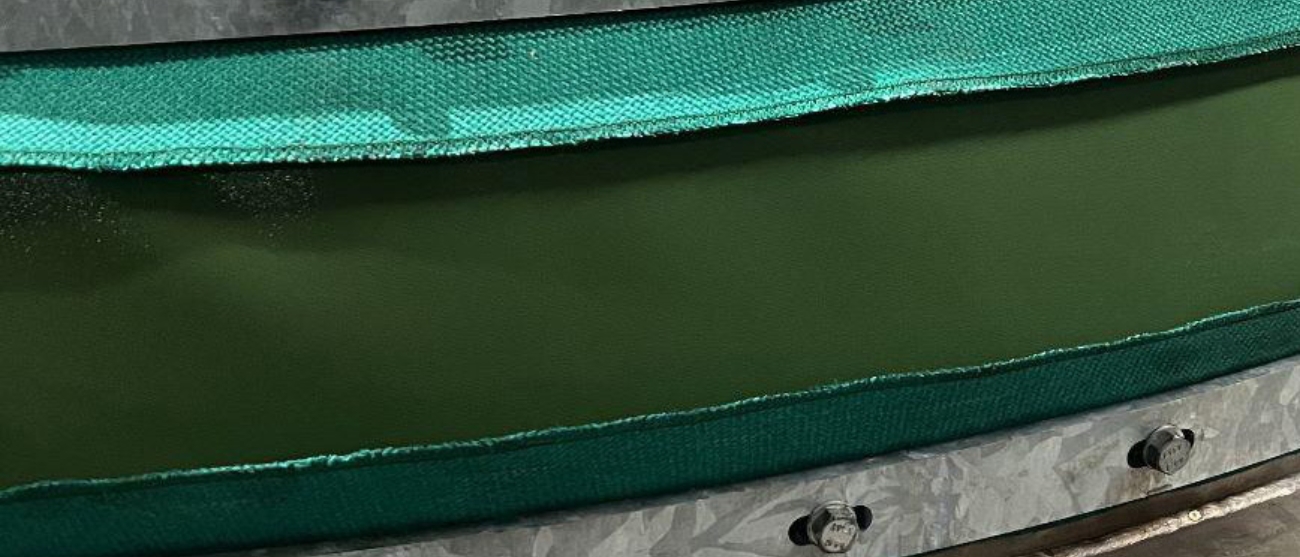
A pipe is static. You cover it, insulate it, fit a metal sheet over it and leave it alone for years. A fabric expansion  joint works in a completely different way: it absorbs the thermal expansion of the duct and dampens vibrations, which means it has to move with every thermal cycle and every change in pressure.

If you encase it in a rigid cover, you are working against its natural function. The fabric continues to move – it cannot do otherwise – but it does so against a constraint that was not intended. Over time, that constraint becomes the main cause of premature deterioration. It is not a question of the quality of the material, but of how it was installed.

When heat cannot escape, it builds up where it shouldn’t

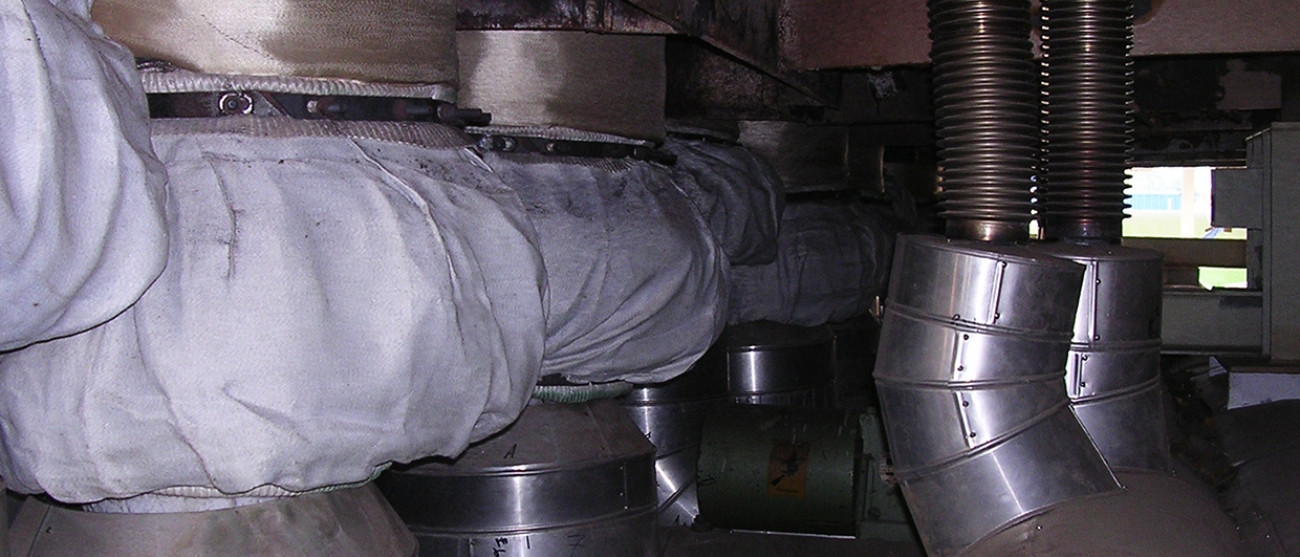
There is a second effect, less visible but just as significant. The fabric expansion joint is designed to release heat to the outside, so when you cover it with a tightly-fitting metal sheet, that heat becomes trapped between the fabric and the covering.

In technical terms, this is known as ‘heat trapping’. Internal temperatures rise above design specifications, the fabric operates under more severe conditions than anticipated and its service life is consequently reduced. From the outside, nothing appears amiss. But the process is already underway, silently, with every cycle.

Two solutions that protect without stopping the movement

If you want to reduce heat loss along the duct without damaging the expansion joints, there are two approaches that that can solve the problem at its root

  • The bolster bag is a flexible insulating product that is installed beneath the expansion joint, between the fabric and the supporting structure. It protects against radiant heat without restricting movement. It is removable, making it ideal for those who need to inspect the joint during routine maintenance without having to perform any additional operation.
  • A spaced exterior cover is the right choice when protection from impacts or the elements is needed. In this case, the cover is kept raised above the expansion joint, with a ventilation gap that allows heat to dissipate normally. That spacing is not a compromise, but an integral part of proper operation.

Two different solutions for different needs. Both are based on the same principle: the expansion joint must be able to do its job.

Proper insulation means knowing what you’re insulating

Every component of a system has its own requirements and an effective insulation plan starts with this distinction. Fabric expansion joints aren’t a difficult-to-manage exception; they’re simply elements that require a different approach than the standard one. Recognizing this early on means avoiding premature replacements and unplanned downtime that could have been prevented by making a different choice during installation.

If you’re evaluating how to manage textile expansion joints in your system, or if you’ve already noticed signs of wear that you can’t explain, New Componit’s technical team is available for a direct consultation. Let’s analyze the situation together and we’ll recommend the solution best suited to the actual conditions of your system.

Contact us anytime:

In an industrial plant, it is often the components that seem the “simplest” that make the difference between production continuity and an unexpected shutdown: failing to give them the right attention increases the risk of disruptions to the entire production process.

An expansion joint that works properly contributes to the performance of the entire plant: it compensates for expansion, absorbs movement, withstands high temperatures, and protects the system from mechanical and thermal stress.

The service life of an expansion joint does not depend solely on product quality: proper installation, periodic inspections, and planned maintenance allow you to minimize the risk of a plant shutdown and the resulting losses in terms of production, time, and emergency management.

At New Componit, we support companies not only in the design and production of fabric expansion joints and high-temperature solutions, but also in installation, supervision, maintenance, and assistance activities.

Our goal is to help you intervene at the right time, with a concrete technical assessment and tailor-made solutions for the real operating conditions of your plant.

Request your TIPCHECK audit now and discover where your plant can improve in efficiency, safety, and operational continuity.

It is not always the most expensive part that stops a system.

Sometimes all it takes is a poorly made joint that causes an invisible heat loss… and therefore performance drops, consumption increases, production stops.

This is how small details become big problems. Especially if they are underestimated.

A prime example? Heat sealing applied to fabric expansion joints.

When done with care and expertise, it guarantees maximum sealing and high performance.

When neglected or done poorly, it can generate heat loss, reduce the useful life of the expansion joint and in the worst cases, cause costly and unexpected system downtime.

What happens if the heat sealing is not perfect?

Heat sealing is a fundamental technical step in the assembly of textile expansion joints. It serves to seal the final layers of the expansion joint, blocking any possible heat or gas leakage.

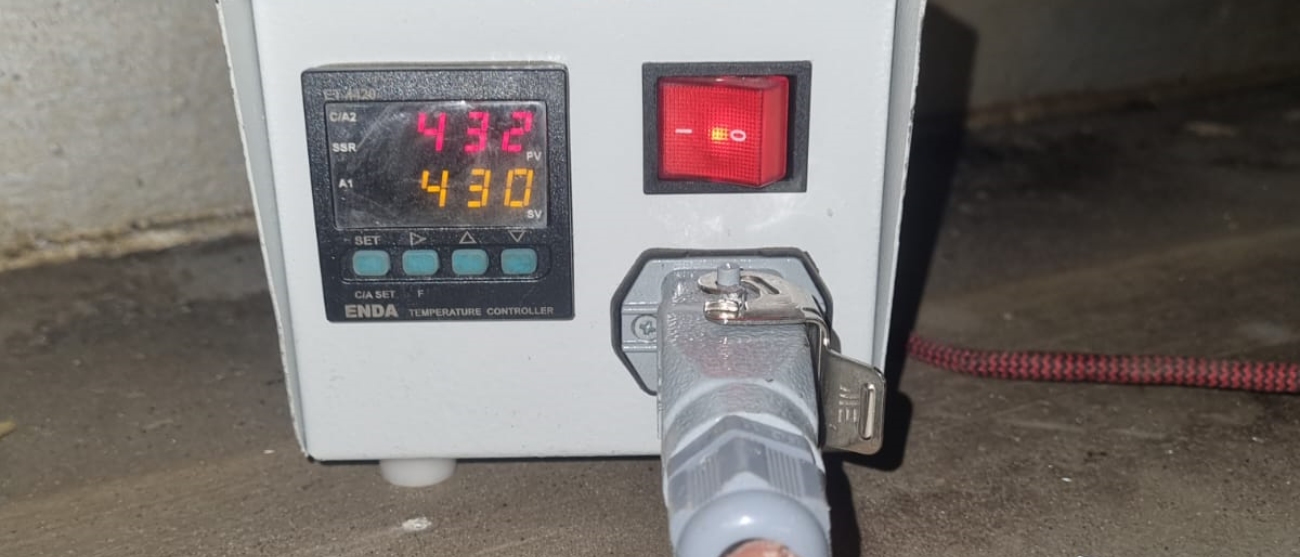
The process consists of inserting a heat-sealing film between two textile layers, which are then pressed and fused with a plate heated to approximately 430–450°C for 3–4 minutes.

It seems like a simple operation. But it is not.

An incorrect temperature, uneven pressure or hasty application is enough to compromise the effectiveness of the entire expansion joint. If not done properly, heat escapes, system performance drops and the expansion joint basically no longer does its job.

A poorly heat-sealed expansion joint can last up to half its normal life.

This means more replacements, more costs and, even worse, more unscheduled downtime.

When space is limited, there is no margin for error

In real industrial plants, textile expansion joints are not installed under ideal conditions.

Work is often carried out in confined spaces, with reduced visibility and limited accessibility.

It is precisely in these contexts that experience makes the difference.

Heat sealing, when carried out by experienced operators with the right tools, guarantees:

  • a durable seal,
  • zero heat loss,
  • maximum plant performance.

Underestimating an expansion joint can be costly

Textile expansion  joints are often perceived as a minor detail.

“They are inexpensive, we install them internally, no expert is needed”. These are widespread but risky beliefs.

When an expansion joint is poorly installed or heat-sealed carelessly, it becomes a weak point that can compromise the entire system.

Even the slightest failure can cause heat loss, reduced performance and, in extreme cases, days of production downtime.

At that point, the cost of the joint is no longer important.

What matters is how much it costs to get everything up and running again.

Proper installation is a job for specialists

The installation of a textile expansion joint is therefore not an incidental step.

It is a technical activity that requires experience, precision and in-depth knowledge of the materials and operating conditions.

Especially when working in confined spaces, such as boiler bottoms or large industrial plant ducts, every action must be performed with accuracy:

  • the position of the expansion joint,
  • the alignment of the layers,
  • the preparation of the welding points
  • heat sealing at 430–450°C for 3–4 minutes.

Even the smallest error at this stage can halve the useful life of the component.

This is why not all teams are able to guarantee the same level of reliability.

New Componit brings its own method to the field

New Componit does not just supply a product.

It arrives on site. It works in direct contact with the plant. It supervises or performs every single step.

Installation is managed by highly qualified teams, who also operate in complex conditions, where there is zero margin for error.

Each heat seal is made with professional tools, temperature controls, application times and layer sealing.

In addition, New Componit technicians directly support the internal teams of companies, including through training or on-site assistance.

Where precision, expertise and reliability are required, there is only one way to achieve a perfectly functioning joint:
rely on those who install it every day, all over the world.

New Componit installations do more than just make an expansion joint work: they optimise the performance of the entire system.

So, if you are replacing your textile expansion joints, trust those who do it every day in systems like yours.

Talk to a New Componit technician: we will help you plan each stage, choose the most suitable solutions and carry out a flawless installation.

Contact us today for a personalised consultation.

There is always a challenge behind every innovation.

For New Componit, that challenge began years ago: to imagine a fabric expansion joint capable of functioning even in the presence of insulation, without losing its mechanical properties and at the same time guaranteeing durability and safety.

An idea that is as simple as it is complex to implement, which has led to the development of a new generation of high-performance textile solutions: Airflex expansion joints.

When insulation becomes a strength

A fabric expansion  joint is not just a simple component. It is a key element within a plant, because it must absorb vibrations, compensate for movements and withstand often extreme temperature and pressure conditions.

With Airflex, New Componit has opened a new phase in the evolution of industrial fabric expansion joints.

The main innovation concerns the possibility of insulating the expansion joint externally, allowing it to operate at temperatures up to 800°C without compromising its efficiency. This is an important technical achievement, because traditionally insulation tended to reduce the joint’s ability to perform its function. With Airflex, however, insulation becomes an ally, not an obstacle.

But Airflex is not just synonymous with high temperatures.

The line also includes fabric expansion joints dedicated to ventilation, designed to work up to 150°C, with advanced acoustic characteristics that reduce sound vibrations and improve workplace comfort.

What makes Airflex a strategic choice

Airflex fabric expansion joints are not only designed to withstand stress: they are manufactured to offer performance and durability never before seen in other compensators.

Their main features include:

  • Structural flexibility, making them ideal for absorbing vibrations and movements without mechanical stress.
  • External insulation option, a key element in reducing heat loss and optimizing the energy efficiency of systems.
  • Resistance to extreme temperatures, up to 800°C in models designed for high temperatures.
  • Customized solutions, thanks to a tailor-made design process that starts with a study of the customer’s needs.

Not just expansion joints: a complete service

New Componit’s real strength lies not only in its products, but also in the integrated service system that accompanies every supply.

Today’s large industrial plants require partners who are capable not only of producing components, but also of following the entire product life cycle: from engineering to assembly, from maintenance to repair.

For this reason New Componit has created a team of specialists, ready to intervene anywhere in the world, offering a complete package that includes:

  • Supervision and assistance with assembly,
  • Rapid repair interventions to reduce costly plant downtime,
  • Preventive maintenance services,
  • Thermographic reports for monitoring operating conditions,
  • Complementary carpentry and welding activities.

In addition  the Expansion Control System service takes customization to the next level, with:

  • Ad hoc design, thermal analysis and test chamber simulations;
  • 3D or 2D engineering for total project control;
  • Production with premium materials and advanced technologies.

Airflex protects your plant from unexpected downtime

One of the highest costs for an industrial plant is not the price of the component, but the downtime caused by a failure.

Airflex fabric expansion joints, combined with New Componit’s maintenance and repair service, drastically reduce these risks, ensuring production continuity and real savings.

In an increasingly fast-paced and competitive industrial world, relying on standard solutions is no longer enough.

Airflex was created for those who want to guarantee maximum efficiency of their plants, reduce heat loss and have a technical partner always at their side.

Would you like to know how Airflex can improve the efficiency and safety of your plant?

Contact us for a free technical consultation.

At the heart of combined cycle heat recovery boiler (HRSG) plants, controlling thermal expansion is one of the most complex challenges, for maintenance personnel and plant managers. Thermal and mechanical stresses, irregular operating cycles and high temperatures put a strain on the seal and reliability of components.

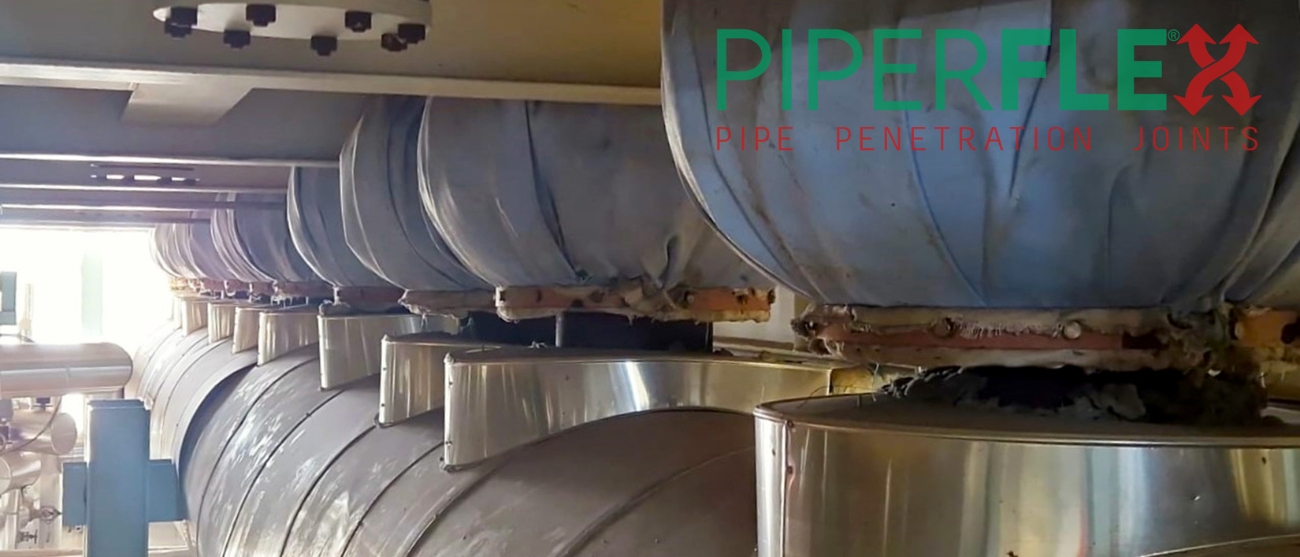
In this critical context Piperflex®  the textile through-wall expansion joint, designed by New Componit, establishes itself as one of the most effective and long-lasting solutions. A strategic choice that combines resistance, reliability and control, responding to concrete and increasingly pressing operational needs.

But what makes Piperflex® so reliable even in the most extreme conditions? Let’s find out point by point with a concrete look at its performance on the field.

Beyond the limits of metal expansion joints: Piperflex® in the most critical areas of HRSG plants

New Componit supplies textile expansion joints for all critical areas of combined cycle plants: from the air intake to the stack. In particular, Piperflex® is designed for the wall passages of HRSG boilers – an area subject to strong temperature changes, mechanical movements and high pressure.

This is where traditional solutions, such as metal expansion joints, begin to show their limits.

One of the strengths of Piperflex® is the ability to compensate for large axial and lateral movements ,protecting the structural integrity of the system and reducing the need for frequent interventions.

Unlike metal expansion  joints – which tend to wear out quickly under “stop & go” operating conditions – Piperflex® maintains high performance over time even in particularly unstable situations.

With a thermal resistance of up to 950°C and excellent gas tightness, this expansion joint is particularly suitable for the high temperatures typical of HRSG systems. Not only  it improves thermal efficiency, but it also helps to minimize the risk of dispersion and leakage.

Each Piperflex®  expansion joint is custom-designed: it is made after a careful analysis of the operating conditions of the plant, thanks to advanced design engineering, technical simulations and tests in a test chamber. The production is completely internal, to guarantee full control over materials quality and precision.

Also the installation is entrusted to highly qualified personnel, for an impeccable and long-lasting result.

More reliability, fewer surprises: Expansion Control System service

Piperflex® is not only an expansion joint. It is part of a comprehensive service that accompanies the customer at all stages: from design to post-installation maintenance. With the Expansion Control System program, New Componit provides a range of services designed to monitor the performance, identify potential problems and optimize plant management.

Technical support is provided by an international team of specialists, able to intervene anywhere in the world. This means controlled installation, on-site supervision, timely repairs and above all, preventive maintenance:an approach that prevents breakdowns, reducing operating costs and extending system life.

At a time when unplanned outages can cause considerable economic damage, having a joint that ensures operational continuity makes all the difference. Piperflex® is designed to resist, adapt and last and it does so without compromise.

Concrete benefits of Piperflex® include:

  • Superior reliability compared to metal expansion joints, even under irregular cycles
  • Maximum thermal resistance up to 950°C
  • Ability to absorb axial and lateral movements
  • Perfect gas tightness even under complex operating conditions
  • Custom and in-house manufacturing, with engineering materials selected to ensure high performance over time
  • Installation performed by certified teams
  • Ongoing technical support and proactive maintenance

Piperflex® is also a strategic asset for HRSG plants. Choosing it means reducing unscheduled shutdowns, containing downtime and achieving a tangible return in terms of business continuity and long component life

The robustness of an HRSG plant is also built through decisions that affect the most critical and stressed areas, when we talk about elements exposed to extreme conditions, what matters is the quality of the design and the precision of the implementation. Piperflex® is much more than a textile expansion joint: it is a guarantee of performance, a protection you can count on and an investment focused on operational continuity and sustainability.

Want to improve comfort and performance in your plant with a tailored solution?

‘Tell me the operating conditions of your system and I will tell you which expansion joint to
choose’.

Let’s pick up where we left off: in our last blog post we started with a brief overview of the
factors that influence the characteristics of expansion joints.

With this short guide, we want to help our readers to find their way in choosing the most
suitable expansion joint; in fact, only the product that takes into account a whole series of
factors can perform at its best.

In the previous post we considered high temperatures, pressure and chemical resistance; in
this second part we look at the other conditions that can frequently be found in systems.

1. High need for versatility and compensation of large movements

Every mechanical application requires a certain type of movement and depending on the
nature of the movements required, it is necessary to choose an expansion joint that offers
the right combination of flexibility and precision.

At New Componit, in addition to the already mentioned Piperflex fabric expansion joints,
which are ideal for high temperature wall applications, we offer Enerflex compensators.

The fabric expansion joints of Enerflex line are particularly suitable in energy field, especially
for applications in air ducts and low-aggressive flue gas ducts.

Their multilayer composition and the materials used in their construction guarantee a high capacity to
compensate for very large movements, giving these expansion joints maximum operational
versatility.

2. Need for thermal reduction

In many industrial applications, overheating of components can cause failure or reduce
operating efficiency. Expansion joints with thermal abatement capabilities are designed to
dissipate the heat generated during operation, thus protecting sensitive components and
prolonging system life.

If you are looking for an expansion joint that provides maximum thermal but also acoustic
abatement, we at New Componit can recommend a fabric expansion joint from the Airflex
line.

The Airflex line includes fabric expansion joints that offer high thermal-acoustic
abatement and are insulated for low and high temperatures. In particular, two main groups
can be distinguished within this range: components designed to work fully insulated
externally, applicable at temperatures close to 800°C, and expansion joints designed for
ventilation, capable of working at temperatures not exceeding 150°C, but with significant
noise abatement characteristics

3. Need for noise abatement and vibration damping

If you work in an environment where noise reduction is a priority, such as in an industrial
plant close to residential areas, or you are looking for an expansion joint for applications that
require low noise impact, the expansion joints with noise reduction properties are the
right solution for you.

These expansion joints are designed to absorb vibrations and reduce the noise
generated during plant operation and your choice can be between textile or rubber
expansion joints.

If you are looking for an expansion joint that provides maximum vibration damping, the
fabric expansion joints of Vibraflex line may be the right choice for you. Please note,
however, that the application conditions for this type of expansion joint are low
temperatures (up to 200°C).

Expansion joints of Vibraflex line have different construction solutions, depending on the
design data and characteristics of the conveyed fluids; in particular, if you need your
expansion joint not only to have the ability to dampen vibrations, preventing them from
propagating along the ducts and structure of your plant, but also to have a high noise
insulation performance, we at New Componit have developed the Vibraflex SOUND series
of compensators, which combine vibration dampening and soundproofing.

Rubber expansion joints, on the other hand, are made of any reinforced elastomer
and/or fluorelastomer, such as natural or synthetic rubbers, giving the joints a special
elasticity. Thanks to this characteristic, rubber expansion joints are able to maximise
vibration damping and noise reduction; furthermore, being reinforced and of suitable
thicknesses they also offer good pressure resistance.

Rubber expansion joints are typically used for gas turbine ducts and any fan model, as well
as in hydraulic systems and piping.

If you need maximum noise dampening performance, rubber expansion joints from the
Acuflex range are perfect for you: they provide both high vibration dampening and noise
abatement performance, as well as maximum pressure sealing.

Another solution that combines noise damping and minimum vibration propagation,
indispensable capabilities of expansion joints on military vessels, for example, is the
Navyflex fabric expansion joints: these expansion joints are specifically designed for
naval applications, have a multi-layer design and are capable of excellent pressure
sealing.

After this quick overview it is, therefore, clear that choosing the right expansion joint for
you, requires careful evaluation of your specific operating conditions and project
requirements.

We at New Componit are at your side to offer you the best solutions to meet any challenge,
ensuring that the expansion joint you choose meets your specific operational needs.

Want to improve comfort and performance in your plant with a tailored solution?