New Componit

Fabric Expansion Joints and Compensators

“There is always the right expansion joint, even for the most extreme conditions.”

We at New Componit have been repeating this expression for quite some time, and in the light of our nearly 30 years of experience, we can state with conviction that there are expansion joints capable of withstanding any condition but, beware, they must be designed with certain caution.

In fact, in order to perform at its best, the expansion joint must be designed and manufactured according to the required operating conditions, which determine its technical characteristics.

To identify the most suitable fabric expansion joint for your application, you need to take into account:

  • temperature;
  • pressure;
  • chemical composition of the fluid;
  • movements;
  • need for thermal abatement;
  • need for sound abatement.

When we have this information , it becomes easier for us to design the perfect expansion joint for you.

In light of this premise, we thought we would create a short and simple guide that can help you identify the component best suited to your needs.

1. High temperatures environments

In high-temperature environments, the expansion joints have to maintain their mechanical and structural properties even when heat conditions become extreme, without suffering deformation or loss of performance.

If you operate in high-temperature conditions, you should opt for multilayer textile expansion joints or metal joints; of course, the specific choice also depends on the other requirements of your plant and the system to which the joint will be applied.

For example: we at New Componit ( specialized in customized textile solutions for heat and temperature change problems) make several lines of textile expansion joints suitable for flue duct systems that work at high temperatures and each of these lines is designed for a specific application.

In particular, if you need an expansion joint for very high temperature flue ducts, operating in chemically aggressive environments, you can choose joints from the Petroflex line. These textile expansion joints offer maximum resistance to extreme temperatures, reaching up to 1300°C.

With the same chemical resistance needs, but applying the expansion joint to flue gas exhaust ducts, the most suitable textile expansion joint is instead part of the Powerflex line.

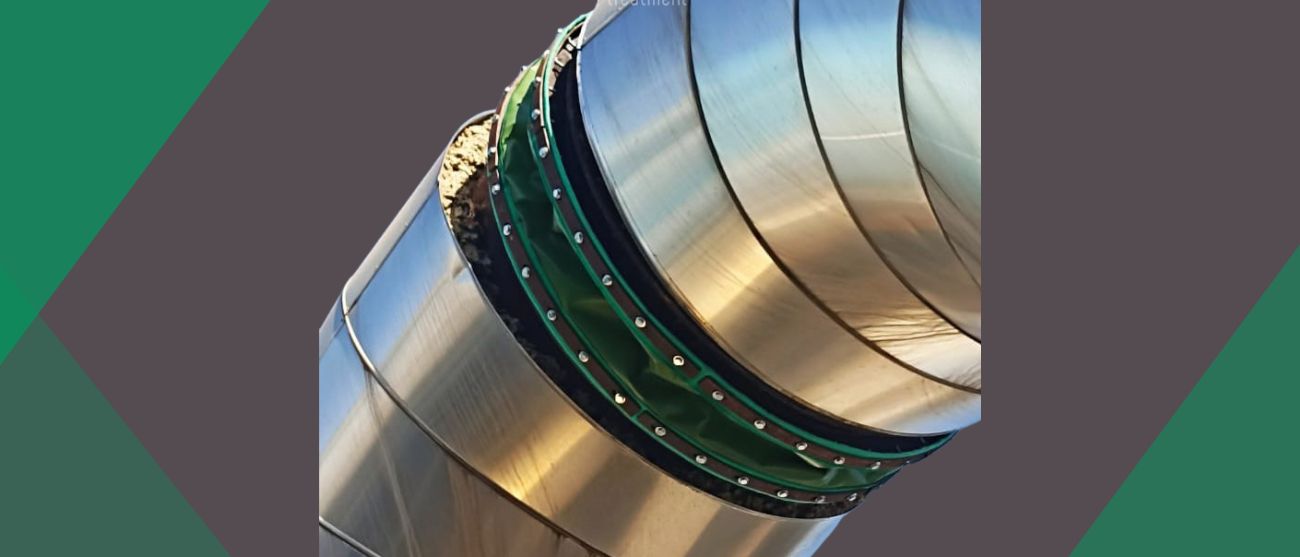
If, on the other hand, you need expansion joints that withstand high temperatures to be applied to the walls of industrial boilers, the Piperflex line is the right solution: these products offer maximum compensation of movements ( axial and lateral) at the same time, even at temperatures of 850°C, making them ideal for wall, roof and bottom penetrations of industrial boilers.

As an alternative to multilayer textile expansion joints, if you operate at high temperatures, you can choose a metal expansion joint: these compensators are made of metal, such as : steel or special alloys; this makes them particularly robust, withstanding high loads, high temperatures and significant pressures.

2. Resistance to pressure and mechanical stress

We have already seen that metal expansion joints are very strong and therefore particularly suitable for operating under high pressure conditions; but there are also textile expansion joints designed to be particularly resistant to mechanical stress.

Textile expansion joints that must withstand pressure are of the multilayer type; in fact, the multilayer design allows different materials to be combined in order to improve the performance of the expansion joint.

In particular, we at New Componit have designed textile expansion joints that are mechanically strong while having strong chemical resistance, thanks to the use of “laminated” fabrics that combine the characteristics of technical fabrics based on glass fiber and fluoropolymers with PTFE cast films.

In fact, joints from the Turboflex line are the best solution for you, if you need a compensator that is particularly resistant to pulsation and erosive phenomena related to turbulence and high smoke velocity.

3. Aggressive environments requiring special chemical resistance

In chemically aggressive environments, corrosion resistance becomes a fundamental necessity: the presence of corrosive chemicals can rapidly deteriorate expansion joints made of inadequate materials, leading to premature failure.

For applications in such environments, it is important to choose expansion joints made of materials that can ensure that the chemical, physical and mechanical properties of the compensators themselves will remain intact over time.

At New Componit, we have designed a line of textile expansion compensators suitable for applications in desulfurization or denitrification plants, where significant concentrations of acid condensates or dust accumulations occur.

In fact, for the construction of the textile expansion joints in the Chemflex line, we carefully selected materials that protect the compensators from the chemical attack of corrosive compounds, ensuring a long service life.

Chemflex joints are generally single-layer and made on a glass fabric or wire cloth and coated with PTFE; this type of composition ensures maximum chemical resistance, but also excellent pressure resistance.

Alternatively, Acuflex elastomer expansion joints are the perfect solution, even better performing in particularly aggressive environments: Viton is a favorite compound, but we also handle neoprene and EPDM.

As you may have already realized, taking into consideration only three factors (temperature, pressure and chemical resistance) the possibilities are many and that is why we always insist with our customers on the importance of product customization: in fact, it is the operating conditions and the performance required of the product that determine its characteristics.

Don’t miss the second part of this guide, where we will discuss the most suitable expansion joints if you need thermal, acoustic or large movement compensation.

At New Componit, we are specializes in textile solutions that can solve problems related to heat, temperature change, noise and fire. For more than 35 years we have been taking our engineering expertise all over the world, measuring ourselves against all kinds of critical issues in plants that develop extreme temperatures and finding ever more innovative solutions.

Want to improve comfort and performance in your plant with a tailored solution?

In the last few months how many times have you heard about energy saving?

How many and which solutions have been proposed to you to optimize the consumptions of your plant?

I can imagine this is a recurrent topic for you too.

Among the various technological solutions there are different insulation systems which, as you already know, contribute to energy efficiency, offer economic savings and improve the sustainability of your company.

Because of the widespread use of these solutions, many companies often contact us to ask if it is possible to insulate the fabric expansion joints.

The answer depends on the characteristics of the fabric expansion joints. Let’s see in detail.

Standard fabric expansion joints

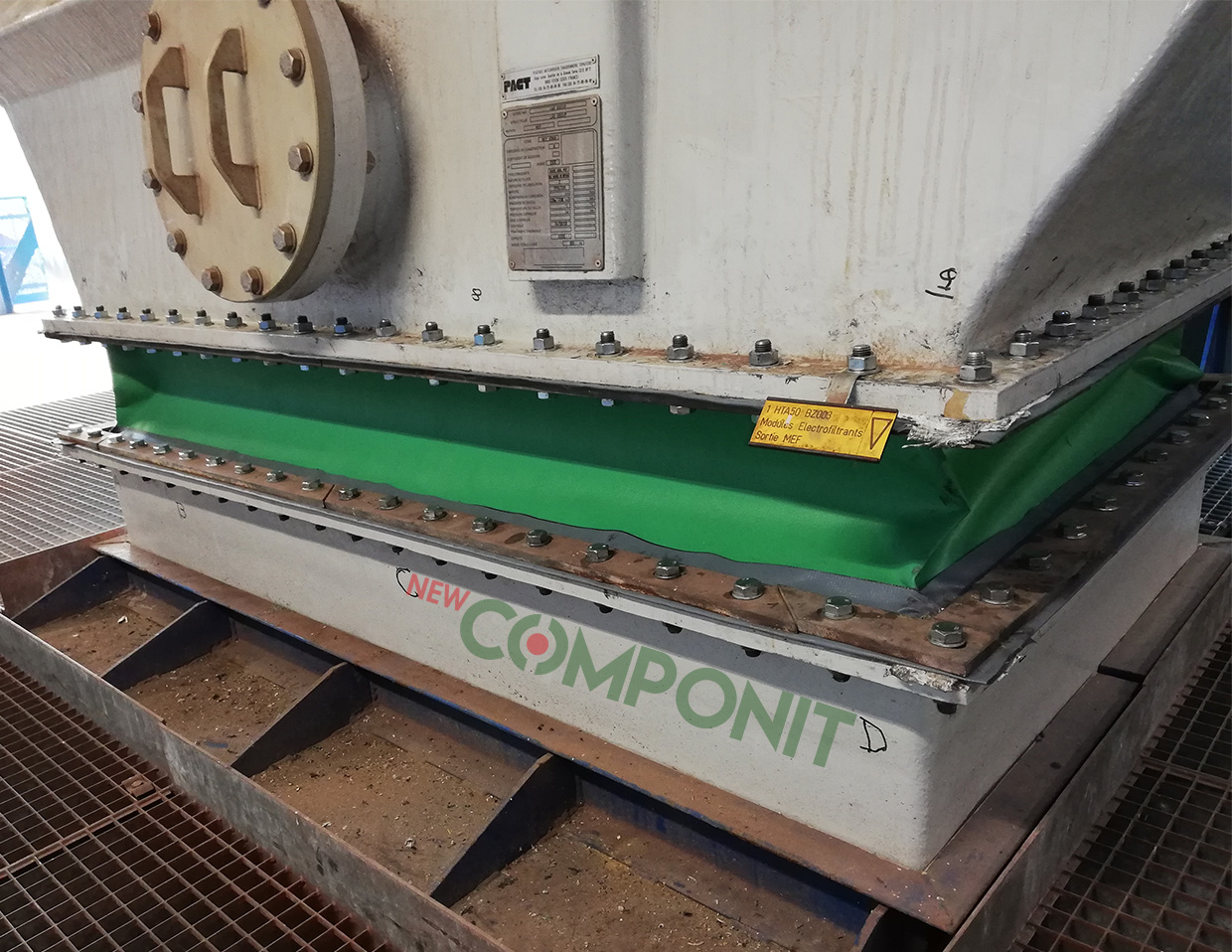
The fabric expansion joints made in standard execution are designed to dissipate the heat of the internal fluid towards the outside; in this way they can carry out their function as compensators even at very high operating temperatures.

Therefore any element( that prevents or limits heat dissipation ) is added to the standard expansion joint, will shorten the expansion joint life.

In fact, since it was not designed to be externally insulated, it will not be able to dissipate the heat and the fabrics will end up deteriorating quickly; in this condition the fabric expansion joint tends to open and break.

The answer to the initial question seems to be “no”… but there are other solutions to make the insulation compatible with fabric expansion joints.

Compatible expansion joints

If we talk about expansion joints compatible with insulation system, first of all we have to do an important premise: there are several types of fabric expansion joints which among other things can be customized on the specific needs of customers .

In this case , if during the design step of the expansion joint, the customer specify the presence of insulation, its characteristics etc, the product can be realized with particular materials that do not provide for thermal reduction. Heat dissipation will instead be guaranteed by the external insulation which will subsequently cover the expansion joint.

These two possibilities do nothing but confirm a concept that we at NEW COMPONIT often repeat to our customers : to be sure that the final product perform at its best, all the relevant specifications must be indicated during the request phase.

I return to the initial premise: fabric expansion joints, insulation and many other technologies dedicated to energy efficiency are really effective only if they are conceived and designed on the basis of an initial study of the energy situation and the specific characteristics of the plant;  only in this way it is possible to propose an adequate solution able to guarantee effective results.

We at New Componit specialize in textile solutions capable of solving problems related to heat, temperature changes, noise and fire. For over 35 years we have been bringing our engineering experience all over the world, dealing with all types of critical issues in systems that develop extreme temperatures and finding increasingly innovative solutions.

We offer our customers a tailor-made service, called  Efficiency Box® which allows us to respond to every type of customer need, in order to make production systems more efficient and safer.

Efficiency Box® includes:

  • monitoring of plants, carried out directly by a skilled New Componit technician
  • design and supply of the required interventions with simple but technologically advanced solutions
  • installation with New Componit personnel or assembly supervision
  • direct assistance and prompt intervention by a dedicated toll-free number.

Want to improve comfort and performance in your plant with a tailored solution?

Today we are going to talk about fabric expansion joints and their correct installation.

In other previous posts we have focused on: the materials we use to realize them, their maintenance and the advantages that they can entail in a plant.

Why dedicate an article to installation?

A correct installation of the fabric expansion joint is as fundamental as its production. I can have a product perfectly made, using the best materials, but if it is installed incorrectly, the fabric expansion joint is not really effective.

Safety first

It happens that companies get in touch with us to buy fabric expansion joints specifying that they do not need support for the installation .

However, it should be kept in mind that, the installation of fabric expansion joints by unskilled personnel entails a number of safety risks to employees, especially when the system is in operation or in half service. Just recently, two workers of one of our customers were injured, by getting burned while they were assembling our products.

In fact, fabric expansion joints are installed in parts of plant where fluids, in a gaseous state, usually flow and which, besides very high temperatures, may contain chemicals or acidic components. These characteristics make the installation step somewhat “delicate”; this is why it is an operation that should not be underestimated at all.

If the expansion joint is not installed correctly, fluid spills can occur and be a health hazard to operators who, as they pass in the vicinity of these areas, risk being burned or coming into contact with chemical agents.

It is not only people who are at risk, but also any equipment that is in the vicinity of an expansion joint which is leaking.

The operation of the plant

In addition to safety, which we would like to remember comes first, we have to consider the plant performance.

If there are fluid leaks, it means that the plant is not working to its full capacity. In such cases, there is a risk of compromising plant operation with the occurrence of sudden and recurring plant shutdowns.

This situation obviously leads to losses in efficiency and considerable economic damage.

The position of fabric expansion joint

A question to which usually we do not pay attention is space. In many cases the fabric expansion joints have to be installed in narrow spaces, difficult to reach. The operation area for the employees involved is limited and the risk of making mistakes is very high; as a result, the installation becomes more complicated.

And then, in light of these considerations: how can we properly install the expansion joint?

Our answer is: delegate the installation to specially trained personnel or provide for the supervision of skilled technicians. Only in this way, we can be sure to install properly the expansion joint and reduce the risk of occurrence of situations as described above.

We also must keep in mind that no fabric expansion joint has a 100% seal, therefore the proper installation is essential to avoid fluid spills or minimize this possibility.

For all these reasons, we at New Componit have created, within our staff, a division exclusively dedicated to installation or assembly supervision. They are specifically trained technicians with decades of experience on site, able to work anywhere in the world.

Want to improve comfort and performance in your plant with a tailored solution?

The bolster is an internal insulation, placed between the conveyor and the external part of expansion joint and its installation brings many benefits.

In addition to this, it also acts as an acoustic barrier and allows the expansion joint to receive less thermal stress, prolonging its life.

We at New Componit offer this and other products for effective solutions against problems due to high temperatures and excessive noise.

Want to improve comfort and performance in your plant with a tailored solution?


The tightness of a fabric expansion joint depends on two key factors: the permeability of the materials used and the level of tightness in the flange area.

Multilayer fabric expansion joints with porous textile materials exhibit significant permeability, whereas single-layer fabric expansion joints, especially those laminated with PTFE, have low permeability.

The final outcome is influenced by the pressure exerted by the flange, counter flanges, and bolt size.

Want to improve comfort and performance in your plant with a tailored solution?

When a plant stops due to a breakdown, it is necessary to solve quickly the problem, in order to restart the production, as soon as possible.

As you know, any downtime means a significant economic loss. In particular if the damage is on a metal expansion joint, placed in a wall pass, roof or bottom of a recovery boiler, in a combined cycle plant, it is important to act immediately.

This type of situation is not that impossible, since expansion joints are often subject to damages. These are flexible connections, whose purpose is to absorb vibrations and compensate the movements, the expansion joints are subject to different types of mechanical stress, as unexpected vibrations or movements, which lead to possible damage.

In these cases, the intervention can have the dual purpose of restarting the system immediately and at the same time ensuring that the compensator is able to work correctly until the scheduled maintenance stop. It is therefore necessary to find a solution that is simple and quick to install.

Fabric expansion joints are the ideal solution

With this premise a fabric expansion joint is the ideal solution as it is a product:

  • technological from the production point of view
  • simple to install
  • easy to replace

In particular, ultra-performing fabric expansion joints are required in combined cycle energy production plants since movements and pulsations in the boiler can be particularly intense.

The first time New Componit faced an intervention of this type was more than 20 years ago: an Italian thermoelectric plant had a similar problem that New Componit solved by means of a fabric expansion joint.

Since then Piperflex®, fabric expansion joints designed and produced by New Componit for these particular conditions, have changed and evolved considerably. Today these products have become essential for:

  • scheduled maintenance intervention of plants;
  • revamping of GVR modules in electricity production plants.

Piperflex® are a type of expansion joints designed for wall pass in recovery boilers (HRSG), with some important advantages:

  • high capacity to compensate large movements, both lateral and axial;
  • unique heat reduction characteristics (up to 900°C);
  • good gas tightness.

They can also successfully replace metal expansion joints for the same applications.

On this purpose, we can say that, in sector like thermoelectric plants, which are  forced to several “stop & go” (depending on energy demand ), metal expansion joints are subject to frequent damages, as they have not been designed for such demanding cycles.

It is for this reason that New Componit has created a task force for intervention in combined cycle plants by supplying and replacing metal expansion joints with fabric expansion joints.

Piperflex® are the result of a continuous research process for more and more efficient materials, capable of withstanding ever higher temperatures and expansion movements.

Furthermore, New Componit offers its customers a tailor-made service called Efficiency Box® which responds to all customers requests, in order to make their production system more productive and safer.

Efficiency Box® includes:

  1. SYSTEM MONITORING, carried out directly by a New Componit qualified consultant.
  2. DESIGN AND SUPPLY of the required interventions with simple but technologically advanced solutions.
  3. INSTALLATION by New Componit personnel or ASSEMBLY SUPERVISION on site.
  4. DIRECT ASSISTANCE AND READY FOR WORK with a dedicated toll-free number.

Want to improve comfort and performance in your plant with a tailored solution?