In an industrial plant, the comfort of those who work every day close to equipment should never be considered a secondary aspect: heat, noise and operational stress can affect the quality of work and make daily activities more complex and less safe, with negative consequences for the entire plant.
At New Componit, safety has always been one of the core principles of our work. That is why we developed EnerSave: a solution designed to protect people without altering your plant’s existing layout.
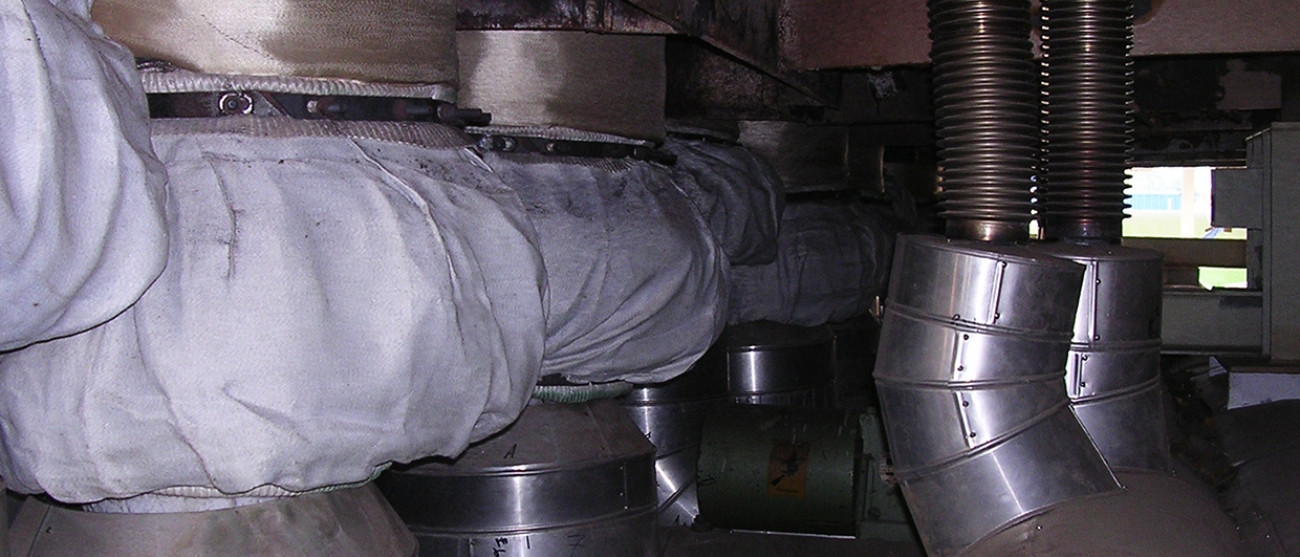
Our thermal insulation cushions are specifically engineered to improve working conditions in high-temperature environments by:
reducing external surface temperatures;
lowering noise levels;
minimising the risk of direct contact with hot surfaces.
If you would like to learn more about EnerSave and identify the most suitable solution for your plant, get in touch with our team. Together, we will assess your specific requirements and identify the most effective solution for your application.
Sales Engineer
Coordinates the development of the Textile Products division, focusing on the analysis of new sectors to approach and the commercial and marketing strategies to implement.
In an industrial plant, it is often the components that seem the “simplest” that make the difference between production continuity and an unexpected shutdown: failing to give them the right attention increases the risk of disruptions to the entire production process.
An expansion joint that works properly contributes to the performance of the entire plant: it compensates for expansion, absorbs movement, withstands high temperatures, and protects the system from mechanical and thermal stress.
The service life of an expansion joint does not depend solely on product quality: proper installation, periodic inspections, and planned maintenance allow you to minimize the risk of a plant shutdown and the resulting losses in terms of production, time, and emergency management.
At New Componit, we support companies not only in the design and production of fabric expansion joints and high-temperature solutions, but also in installation, supervision, maintenance, and assistance activities.
Our goal is to help you intervene at the right time, with a concrete technical assessment and tailor-made solutions for the real operating conditions of your plant.
Request your TIPCHECK audit now and discover where your plant can improve in efficiency, safety, and operational continuity.
At home when you feel cold, the first thing you do is close the windows and only then you turn up the heat. No one would keep the radiators cranked up with the windows wide open, because the waste would be so obvious as to seem ridiculous.
Yet in industrial plants, something very similar happens, every day, all year round. Valves operating at 300 °C without any insulation, exposed flanges, scalding pipes left out in the open. Energy escapes unchecked and no one even notices anymore, because “it’s always been that way” and because those leaks make no noise and don’t halt production.
Besides, if your home were in energy class E or F you wouldn’t tear it down to rebuild it. You’d make targeted improvements—windows and doors, exterior insulation, solar panels—with a measurable return on your utility bill. The exact same principle applies to your heating system: there’s no need to start from scratch. First, you need to stop heating air that nobody uses.
The heat loss you can’t see costs you money every day, even when the system is running
An uninsulated valve operating at 300 °C continuously dissipates heat, 24 hours a day, 365 days a year. If you multiply this by the dozens or hundreds of uninsulated points found in an average plant, the cost quickly and significantly increases.
The problem is that these leaks don’t trigger alarms and don’t halt production. They simply consume energy and generate costs that end up on the bill without anyone being able to pinpoint a specific cause. They remain there year after year , precisely because
They remain there, year after year, precisely because they don’t cause visible failures.
They don’t cause visible failure. The good news is that today there is a concrete way to track down these leaks and put a number on them. With a thermographic analysis and an inventory of critical points
The good news is that today there is a concrete way to track down these leaks and put a number on them. With a thermographic analysis and an inventory of critical points—pipes, tanks, valves, flanges, heat exchangers—you can finally quantify how much energy is being lost, how much it costs each year and where it makes the most sense to take action first.
Insulating exposed areas reduces energy consumption immediately, without disrupting the production process
Insulating hot or cold surfaces does not require structural changes to the plant, does not necessitate halting production for weeks and does not involve complex permits or redesigns. It simply involves installing removable thermal blankets, technical linings, or custom insulation in the areas identified as priorities by the analysis.
The effect is immediate and measurable: less heat loss, less energy consumed and less CO₂ emitted.
And the best part is that the return on investment can be calculated even before the work begins, because the audit provides precise data for each individual point: lost kWh, annual cost of heat loss, expected savings after the work and reduction in emissions.
First eliminate visible waste, then look to the future with renewables and heat recovery
Solar power, process electrification, heat recovery, smart monitoring: these are all important steps toward a more sustainable plant. But starting there without first eliminating basic energy losses is like installing solar panels on a house with broken windows. The effect is there, but part of the investment is negated by the waste that remains.
Insulation is the prerequisite—the intervention with the most favorable cost-benefit ratio and the quickest to implement.
Every euro saved on energy loss becomes a euro you can reinvest in more advanced technologies, starting from an optimized energy foundation and with already achieved measurable results.
How to find out exactly where your system is wasting energy and how much it’s costing you
The process is simpler than it seems. It starts with a TipCheck energy audit—New Componit’s technical inspection with thermographic analysis—which maps all the uninsulated or poorly insulated areas of your plant and calculates, for each one, the energy loss in kWh, the annual cost and the potential savings.
The result is an objective snapshot that tells you exactly where to take action, in what order and with what expected return
Finally, you have the data and numbers you need to make informed decisions.
Most companies put it off. “We’ll do it next year.” “We have other priorities right now.” Meanwhile, the operating margin shrinks a little every month, without anyone being able to pinpoint the exact cause.
If you want to understand how much your facility is losing, let’s talk. New Componit has been conducting TipCheck audits and industrial insulation projects for 40 years, in Italy and around the world. The first step is to look at the numbers together.
Before planning insulation work, many companies believe they already know their plant inside out. After all, they work there every day. They know where the pipes are hot to the touch, where the air is heavier, where you can feel the heat from a distance.
However, this familiarity can be misleading. Knowing a system is not the same as having a complete picture of its energy status. And without that picture, any decision risks being based on impressions rather than concrete facts.
Insulation work on industrial plants may seem like a minor technical operation. In reality, it has significant strategic importance: it reduces heat loss, improves the overall efficiency of the plant and keeps operating costs down over time. We are talking about work that may involve pipes, valves, flanges, tanks, heat exchangers, or any component exposed to significant temperatures.
When well planned, they bring immediate and measurable benefits. But if they are based on incomplete or inaccurate information, there is a real risk of: investing in the wrong areas, underestimating the real priorities, or designing solutions that do not work as they should.
What you need is a technical picture, a snapshot that shows where energy is being lost, how much is being lost and what the real priorities are.
No assumptions. No rough estimates. Just rigorous mapping based on measurable data and thermographic analysis.
Because only when you have this snapshot you can make an informed decision about whether to take action, where to do so, and what return to expect.
The 7 pieces of information that distinguish a technical picture of the system from a quick glance
A serious energy audit is not limited to walking around the system with a thermal imaging camera. It collects a series of in-depth information that makes the difference between an effective intervention and one that does not produce the desired results.
Below is the information that should emerge from a well-done analysis.
1. Which parts of your system need insulation
Not all components are the same and not all require the same type of attention. An accurate analysis pinpoints exactly where insulation is completely missing, where it has been damaged over time, where it has only been partially installed and where it is simply old and no longer effective.
This mapping allows you to focus resources and energy on the points that have a real impact on consumption, without wasting budget on marginal interventions.
2. Which components are examined
The analysis does not stop at the main pipes. It covers the entire heating system: pipes of all diameters, valves, flanges, pumps, filters, tanks, heat exchangers, expansion joints. Any element that operates with hot or cold fluids and that could be a source of dispersion.
The more thorough the investigation, the more reliable the final picture.
3. What is your current energy consumption?
Knowing how much you are consuming today is the starting point. But even more important is understanding how much of that consumption is related to avoidable losses. The analysis quantifies energy losses through thermographic measurements and engineering calculations that take into account surface temperature, component size, and operating conditions.
4. What energy savings are realistically achievable?
The audit calculates potential energy savings in terms of kWh or MWh per year, providing objective data that allows you to assess whether the investment makes sense from a technical and economic point of view.
5. How much CO₂ reduction can you expect?
Every kWh that is not wasted also translates into lower carbon dioxide emissions. The analysis quantifies this environmental impact, providing a clear picture of the contribution to corporate sustainability. This is an increasingly important aspect, both for regulatory and reputational reasons.
6. How much money can you save?
Energy savings are translated into annual financial savings based on the company’s specific energy costs. Once the project has been studied, this information will be useful for evaluating the return on investment in concrete terms and making financially sound decisions.
7. Where are you losing energy
The most visible part of the analysis is the photographic and thermographic report. Infrared thermography clearly shows the areas where heat is being lost, making the situation immediately understandable. These images speak for themselves.
This picture has a name: TipCheck
TipCheck is the standardized energy audit developed by New Componit, an accredited member, since 2019, of EIIF ( European Industrial Insulation Foundation).
Thanks to this certification, New Componit conducts energy audits with personnel qualified according to EIIF standards. The goal is to provide companies with an accurate diagnosis of the energy status of their plant, with objective data on which to base informed decisions: not impressions, but concrete numbers that show where, how much, and why energy is being wasted.
TipCheck quantifies the potential energy, environmental and economic savings in an objective and comparable way. It avoids wasting resources on non-priority or poorly dimensioned interventions. It transforms uncertainty into a strategy.
With this snapshot in hand, you may also decide not to take action. But at least you do so with full awareness. Or you can choose to improve the energy status of your system. In that case, you know exactly where, how much, and with what expected return.
If you want to learn more about how much you are wasting and how much you could save, request our TipCheck !
Start thinking of cleaning as an invisible but continuous activity that works alongside you. Production doesn’t stop. Neither does cleaning.
Project Engineer
Level 2 TIPCHECK Expert, he puts his technical expertise at the service of customers to deliver reliable, high-performance, and high value-added solutions for industrial plants.
Those who work in industry know that the accumulation of dust, residues and encrustations inside silos, ducts, heat exchangers or boilers is not just a question of efficiency.
It is an operational risk, it is extraordinary maintenance that needs to be planned. In many cases, it is a plant shutdown that must be avoided at all costs.
It is in this context that acoustic cleaning proves to be a strategic solution.
A silent technology — successfully adopted by New Componit — that allows solidified deposits to be removed without direct contact, without the use of chemicals and above all, without interrupting production.
A well-established technology. That now looks beyond
The acoustic hornsSafefon® brand used by New Componit –– operate using low-frequency, high-intensity sound waves. Powered by compressed air, once installed in strategic points of the system, they generate controlled vibrations capable of loosening and removing encrustations accumulated on the internal walls.
All this without structural damage, without risk of corrosion and without the need for invasive interventions.
This technology is already widely used and tested in highly critical contexts such as the ceramics sector and storage silos, where the accumulation of material compromises process continuity and efficiency.
New Componit has gained concrete experience in integrating these solutions, helping to improve their operational effectiveness and extend their use.
The real news? Today, the company is successfully applying acoustic horns in other industrial sectors as well, where until recently it was believed that acoustic cleaning was not suitable or advantageous.
New areas, same challenges. But now there are new solutions too.
Cement factories, power stations, food processing plants: these are just some of the contexts in which acoustic horns are being tested — and adopted — for their ability to intervene where other systems fail.
In environments where operating temperatures can reach 1000°C and where mechanical vibrations – such as external hammers – can damage structures, acoustic cleaning is a non-invasive and more sustainable alternative.
The body of the horns is made of AISI 316 stainless steel, resistant to extreme conditions and high chemical or thermal aggression.
Furthermore, thanks to the possibility of automatic activation at predefined intervals, the system not only cleans but also prevents the formation of new deposits, keeping the system in optimal condition without interrupting production cycles.
Not just efficiency: safety and savings too
One of the advantages most appreciated by those who have already adopted this technology is operational continuity.
The system does not require the plant to be shut down, dismantled, or work at height or in confined spaces.
This not only limits the costs associated with machine downtime, but also reduces the risks for operators and the impact of maintenance on the organisational level.
Add to this the durability of the materials, ease of installation and virtually zero maintenance and it is easy to see why acoustic cleaning is now seen as a real innovation, even in sectors where it had not yet been exploited.
A tailor-made system with New Componit expertise
New Componit, a benchmark in heat management for forty years — with solutions such as textile expansion joints, insulating jackets and rubber expansion joints — has integrated the use of acoustic horns into its technical offering, providing customers with a complete, scalable and highly customised system.
Each project is preceded by a dedicated technical consultation, with an on-site inspection and analysis of the critical points of the system.
This is followed by the supply of the devices, installation (with on-site supervision if required) and after-sales technical support.
Would you like to know if acoustic cleaning can work in your system? Contact us
We will help you assess compatibility, concrete benefits and the possibility of carrying out a test before proceeding with installation.
Start thinking of cleaning as an invisible but continuous activity that works alongside you. Production doesn’t stop. Neither does cleaning.
When working in high-temperature environments, insulation cannot be compromised.
It must be effective, resistant… and above all, safe.
In recent years, more and more companies are choosing a new generation of materials: so-called calcium-free materials, made of high-purity quartz fibre.
Why? Because they can withstand extreme heat without triggering dangerous chemical reactions.
A smart choice — and an increasingly popular one — for those who want not only good performance, but also greater protection for workers, fewer hidden risks and greater regulatory peace of mind.
What are ‘calcium-free’ materials?
They are advanced technical materials, free of components that can trigger unwanted reactions at high temperatures, such as calcium, sodium or potassium oxides.
They are obtained through a chemical purification process that allows a composition of over 95% silicon dioxide (SiO₂) to be achieved, with the addition of alumina to increase stability.
Compared to traditional insulators – rock wool, ceramic fibres, untreated glass fibres – they offer:
Greater thermal resistance (up to 1200°C);
Dimensional stability even in aggressive environments;
No release of hazardous substances.
In summary: these materials are designed to protect systems and people, even in critical areas such as expansion joints, turbines, compensators and flanges.
Why are they so important?
Because not all insulating materials are the same.
At certain temperatures, traditional calcium-based insulating materials can react with chromium and oxygen steel, forming hexavalent chromium — a substance classified as a category 1B carcinogen.
With calcium-free materials, this risk is eliminated at source: there is no calcium, so no reaction can occur.
This means:
Less exposure for operators;
No extraordinary remediation;
Greater ease in complying with regulations (such as the REACH Regulation and Legislative Decree 81/2008);
Fewer surprises during environmental or HSE audits and inspections.
The advantages for your company
Adopting calcium-free materials means:
Reducing the chemical risks associated with the formation of hexavalent chromium.
Protecting workers’ health with solutions that are safe even in critical conditions.
Streamlining HSE procedures and avoiding costly remediation.
Extending the life of insulation even in aggressive environments.
Dealing with fewer unexpected events, greater control and regulatory compliance.
It is not just a technical choice.
It is a more conscious, modern and responsible way of working.
Green Flex: More than just a product, a responsible choice
Choosing safer materials means investing in more reliable systems, better protected operators and more robust companies.
And calcium-free materials, such as those used in the production of the Green Flex line, are now the technical standard for those who work at high temperatures and want to eliminate the risk at source.
Green Flex is designed not to generate hexavalent chromium, even in the most critical conditions and to offer stable, long-lasting performance that complies with the most demanding regulations.
Would you like to know if your plant still uses potentially hazardous materials?
Contact New Componit team today for a free consultation.
We will analyse the critical points together and help you choose the right solution to work safely, with more control and fewer unexpected events.
Because good insulation is not just a barrier.
It is a competitive advantage that protects, simplifies and improves every aspect of your operations.