New Componit

Simone Balbi

At home when you feel cold, the first thing you do is close the windows and only then you turn up the heat. No one would keep the radiators cranked up with the windows wide open, because the waste would be so obvious as to seem ridiculous.

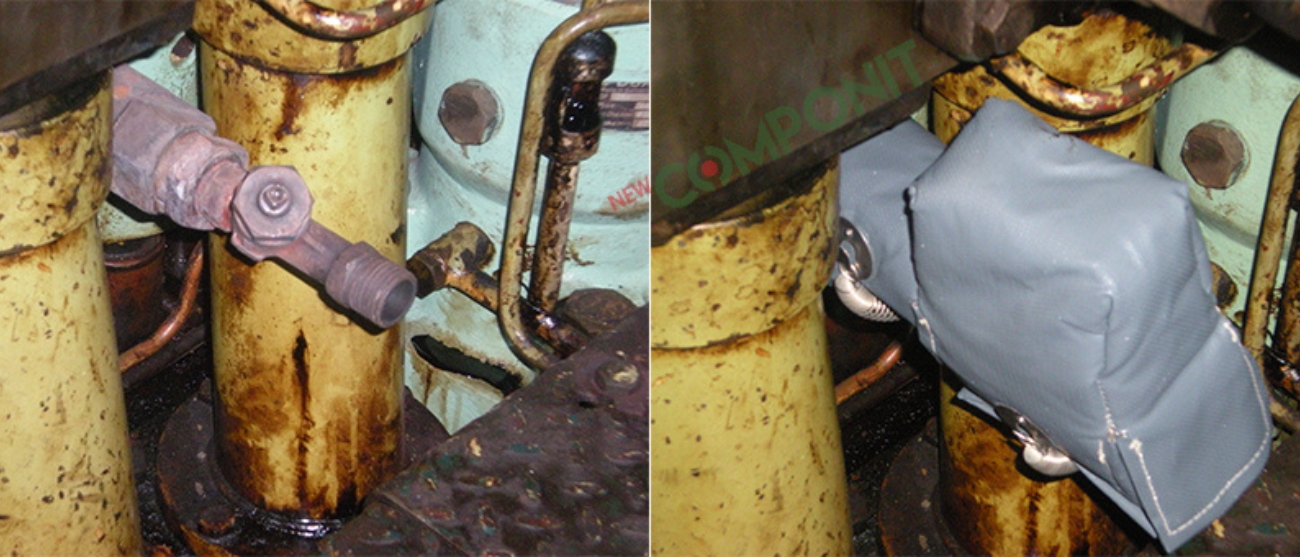
Yet in industrial plants, something very similar happens, every day, all year round. Valves operating at 300 °C without any insulation, exposed flanges, scalding pipes left out in the open. Energy escapes unchecked and no one even notices anymore, because “it’s always been that way” and because those leaks make no noise and don’t halt production.

Besides, if your home were in energy class E or F you wouldn’t tear it down to rebuild it. You’d make targeted improvements—windows and doors, exterior insulation, solar panels—with a measurable return on your utility bill. The exact same principle applies to your heating system: there’s no need to start from scratch. First, you need to stop heating air that nobody uses.

The heat loss you can’t see costs you money every day, even when the system is running

An uninsulated valve operating at 300 °C continuously dissipates heat, 24 hours a day, 365 days a year. If you multiply this by the dozens or hundreds of uninsulated points found in an average plant, the cost quickly and significantly increases.

The problem is that these leaks don’t trigger alarms and don’t halt production. They simply consume energy and generate costs that end up on the bill without anyone being able to pinpoint a specific cause. They remain there year after year , precisely because

They remain there, year after year, precisely because they don’t cause visible failures.

They don’t cause visible failure. The good news is that today there is a concrete way to track down these leaks and put a number on them. With a thermographic analysis and an inventory of critical points

The good news is that today there is a concrete way to track down these leaks and put a number on them. With a thermographic analysis and an inventory of critical points—pipes, tanks, valves, flanges, heat exchangers—you can finally quantify how much energy is being lost, how much it costs each year and where it makes the most sense to take action first.

Insulating exposed areas reduces energy consumption immediately, without disrupting the production process

Insulating hot or cold surfaces does not require structural changes to the plant, does not necessitate halting production for weeks and does not involve complex permits or redesigns. It simply involves installing removable thermal blankets, technical linings, or custom insulation in the areas identified as priorities by the analysis.

The effect is immediate and measurable: less heat loss, less energy consumed and less CO₂ emitted.

And the best part is that the return on investment can be calculated even before the work begins, because the audit provides precise data for each individual point: lost kWh, annual cost of heat loss, expected savings after the work and reduction in emissions.

First eliminate visible waste, then look to the future with renewables and heat recovery

Solar power, process electrification, heat recovery, smart monitoring: these are all important steps toward a more sustainable plant. But starting there without first eliminating basic energy losses is like installing solar panels on a house with broken windows. The effect is there, but part of the investment is negated by the waste that remains.

Insulation is the prerequisite—the intervention with the most favorable cost-benefit ratio and the quickest to implement.

Every euro saved on energy loss becomes a euro you can reinvest in more advanced technologies, starting from an optimized energy foundation and with already achieved measurable results.

How to find out exactly where your system is wasting energy and how much it’s costing you

The process is simpler than it seems. It starts with a TipCheck energy audit—New Componit’s technical inspection with thermographic analysis—which maps all the uninsulated or poorly insulated areas of your plant and calculates, for each one, the energy loss in kWh, the annual cost and the potential savings.

The result is an objective snapshot that tells you exactly where to take action, in what order and with what expected return

Finally, you have the data and numbers you need to make informed decisions.

Most companies put it off. “We’ll do it next year.” “We have other priorities right now.” Meanwhile, the operating margin shrinks a little every month, without anyone being able to pinpoint the exact cause.

If you want to understand how much your facility is losing, let’s talk. New Componit has been conducting TipCheck audits and industrial insulation projects for 40 years, in Italy and around the world. The first step is to look at the numbers together.


When working in high-temperature environments, insulation cannot be compromised.

It must be effective, resistant… and above all, safe.

In recent years, more and more companies are choosing a new generation of materials: so-called calcium-free materials, made of high-purity quartz fibre.

Why? Because they can withstand extreme heat without triggering dangerous chemical reactions.

A smart choice — and an increasingly popular one — for those who want not only good performance, but also greater protection for workers, fewer hidden risks and greater regulatory peace of mind.

What are ‘calcium-free’ materials?


They are advanced technical materials, free of components that can trigger unwanted reactions at high temperatures, such as calcium, sodium or potassium oxides.

They are obtained through a chemical purification process that allows a composition of over 95% silicon dioxide (SiO) to be achieved, with the addition of alumina to increase stability.

Compared to traditional insulators – rock wool, ceramic fibres, untreated glass fibres – they offer:

  • Greater thermal resistance (up to 1200°C);
  • Dimensional stability even in aggressive environments;
  • No release of hazardous substances.

In summary: these materials are designed to protect systems and people, even in critical areas such as expansion joints, turbines, compensators and flanges.

Why are they so important?

Because not all insulating materials are the same.

At certain temperatures, traditional calcium-based insulating materials can react with chromium and oxygen steel, forming hexavalent chromium — a substance classified as a category 1B carcinogen.

With calcium-free materials, this risk is eliminated at source: there is no calcium, so no reaction can occur.

This means:

  • Less exposure for operators;
  • No extraordinary remediation;
  • Greater ease in complying with regulations (such as the REACH Regulation and Legislative Decree 81/2008);
  • Fewer surprises during environmental or HSE audits and inspections.

The advantages for your company

Adopting calcium-free materials means:

  • Reducing the chemical risks associated with the formation of hexavalent chromium.
  • Protecting workers’ health with solutions that are safe even in critical conditions.
  • Streamlining HSE procedures and avoiding costly remediation.
  • Extending the life of insulation even in aggressive environments.
  • Dealing with fewer unexpected events, greater control and regulatory compliance.

It is not just a technical choice.

It is a more conscious, modern and responsible way of working.

Green Flex: More than just a product, a responsible choice

Choosing safer materials means investing in more reliable systems, better protected operators and more robust companies.

And calcium-free materials, such as those used in the production of the Green Flex line, are now the technical standard for those who work at high temperatures and want to eliminate the risk at source.

Green Flex is designed not to generate hexavalent chromium, even in the most critical conditions and to offer stable, long-lasting performance that complies with the most demanding regulations.

Would you like to know if your plant still uses potentially hazardous materials?

Contact New Componit team today for a free consultation.

We will analyse the critical points together and help you choose the right solution to work safely, with more control and fewer unexpected events.

Because good insulation is not just a barrier.

It is a competitive advantage that protects, simplifies and improves every aspect of your operations.

It’s not just a question of energy and CO.

When we talk about industrial technical insulation, our minds immediately turn to concepts such as energy efficiency, plant protection, emission reduction and regulatory compliance. All of which are correct. But this view is incomplete.

More and more companies are discovering another value, perhaps less obvious but equally strategic: the direct impact on the well-being of people working in production environments.

More stable temperatures, less noise, greater safety: what was once perceived as an exclusively technical intervention is becoming a concrete lever for improving quality of life in the workplace, reducing accidents, and increasing productivity.

A silent but real transformation that is shifting the focus from the plant… to people.

And perhaps the time has come to start looking at technical insulation from this new perspective as well.

An often underestimated issue: comfort in production departments

Those who work every day in an industrial plant know this well: the intense heat near uninsulated pipes and valves, the constant noise of operating equipment, the impossibility of touching a surface without risking a burn… these are factors that directly affect physical and mental well-being.

  • Fatigue increases.
  • Concentration decreases.
  • Errors multiply.
  • The risk of accidents is always around the corner.

Yet, all this is often accepted as an inevitable part of the job. But it doesn’t have to be that way.

Technical insulation is already the answer. Our Enersave thermal jackets —designed for valves, flanges, pumps and filters—not only serve to contain heat loss and save energy. They also offer concrete, visible, and measurable benefits for those who work alongside this equipment every day:

  • They lower the surface temperature of insulated components, drastically reducing the risk of accidental contact with hot elements.
  • They stabilize the environment, helping to create more balanced thermal conditions, especially in departments where cold and hot areas alternate.
  • They dampen the noise generated by operating equipment, making the department more livable and less stressful from an acoustic point of view.

The result? A better quality of life for workers

QImproving operational comfort triggers a virtuous circle:

  • Operators are more attentive and relaxed.
  • They work in safer conditions.
  • They reduce the margin for error.
  • And, last but not least, they feel that the company is paying real attention to them.

What was once considered a simple technical covering thus becomes a real ally for productivity and staff motivation.plice rivestimento tecnico, si trasforma così in un vero alleato per la produttività e la motivazione del personale.

An advantage for entrepreneurs too

The adoption of technical insulation systems such as Enersave also brings benefits in terms of management:

  • Reduction in accidents = fewer days lost and fewer unexpected costs.
  • More comfortable environment = easier to retain qualified staff.
  • Easier maintenance = the jackets are removable and reusable, simplifying inspections.
  • Energy savings = less heat loss means lower bills and greater sustainability.

It’s not a dream. It works, and it works right away. Those who have implemented these solutions have seen tangible results within the first few weeks.

Change starts with the details. And these really make the difference.

At a time when employee wellbeing is becoming increasingly important, it is time to look at technical details with fresh eyes.

Because a more comfortable, safe and stable environment can also be created with a well-insulated valve.

Would you like to learn more about how to improve the comfort and efficiency of your system?

Contact New Componit for a dedicated consultation. A small intervention. A big step for those who work alongside you every day.

Until now, evaluating the efficiency of an industrial technical insulation system was often based on assumptions, estimates or generic parameters.

As of December 1, 2024, with the entry into force of EN 17956:2024, companies finally have an objective, measurable and independent tool to evaluate the energy performance of their insulation system.

This is a paradigm shift that can transform an often neglected area, of the system, into a concrete lever of performance, sustainability and competitiveness.

What the standard EN 17956:2024 provides and why it marks a turning point

EN 17956:2024 is a European standard designed to bring transparency, comparability and scientific method to the evaluation of technical insulation systems.

At its heart is an energy rating system that assigns a score from A (highest efficiency) to G (lowest), based on the density of heat loss flux.

In practice: the more effective an insulation is at retaining energy, the higher its class will be. On the other hand, if it lets too much heat through (beyond the maximum value of class F), it will be classified as G.

This methodology represents a revolution for several reasons:

  • It is independent of the material used, since it evaluates the actual performance, not the brand or type of insulation.
  • It is applicable to any geometry, such as piping, flat surfaces, special components and any other shapes found in complex industrial plants.
  • It covers a wide temperature range, from -30°C to +650°C.
  • It is replicable and comparable, so any company can get a consistent and comparable assessment with that of other operators or plants.

For companies, this is a clear opportunity: to know exactly where, how much and why they are losing energy, in order to take targeted action.

But how does the EN 17956:2024 standard apply in practice? We look at it in the next few lines.

How the method works (and what it allows you to do)

The classification process according to EN 17956:2024 is structured in four key steps, designed to accompany the company from goal setting to reading the results.

1. Selecting the efficiency class

It always starts with a strategic choice: What is the level of energy efficiency I want (or can) achieve?

Choosing the desired class (from A to F) allows you to calibrate the intervention according to the expected ROI.

2. Identifying the process temperature

 Every plant has specific operating conditions. By indicating the operating temperature, you can calculate the thickness needed and the most suitable type of insulation to fall within the selected class.

3. Defining the geometry

The shape, size and type of the surface or component to be insulated (pipes, surfaces, flanges, etc.) are specified. This step is essential for reliable simulations.

4. Interpretation of results

The system returns the maximum allowable dispersion value for the chosen class, along with an indication of the minimum space required to meet it. This way you can check whether your current insulation is adequate–or how far you are from your goal.

From “technical cost” to strategic lever: the benefits for your company

Too often technical insulation is treated as a passive item in maintenance budgets, with invisible losses that, on a European scale, translate into huge economic costs every year.

Adopting EN 17956:2024 means changing your perspective:

  • You can accurately measure the efficiency of your insulation, with real data, not assumptions.
  • You can identify critical points in your system and plan a revamp with a measurable return on investment.
  • You can compare different solutions, without relying only on data sheets or sales brochures.
  • You can demonstrate compliance with regulations such as EED and IED, which are increasingly central to sustainability policies.
  • And above all: you can reduce consumption and costs, improving competitiveness and reducing your environmental footprint.

Do you want to know how to apply EN 17956:2024 to your plant ?

At New Componit, we can support you step by step: from the initial assessment to the performance simulation and the proposal of tailor-made solutions to meet the highest standards.

Get in touch with us to request a simulation based on the TIPCHECK method, our energy diagnosis protocol useful for identifying heat loss and quantifying potential savings.

You’ll find out where you’re losing energy and how much you could really save.

Because today, insulation is no longer just protection.

It’s a competitive advantage.

Want to improve comfort and performance in your plant with a tailored solution?

In the era of digital transformation, information security has become a vital pillar to protect both business and customer data. With ever-evolving cyber threats, ensuring a secure environment is not just a priority but a strategic responsibility for every company.

However, guaranteeing security doesn’t just mean adopting cutting-edge technologies – it requires a deep cultural shift that involves every level of the organization.

At New Componit, we’ve embarked on an ambitious journey to strengthen information security, guided by three main pillars: continuous training, proactive technology, and a culture of collaboration. This journey is not just an investment to protect our company but also a commitment to ensuring that our clients’ data is always secure.

Continuous Training: The Heart of the Strategy

At New Componit, we firmly believe that the first step toward enhanced security lies in people. Every member of our team is an active participant in this journey, as individual awareness and preparation are our greatest allies. Technology alone isn’t enough—if people aren’t trained to recognize and handle threats, the entire security system can become vulnerable.

Continuous training is, therefore, the heart of our strategy. We regularly organize sessions that go beyond theory, offering practical and immediately applicable tools. For instance, our team members learn to:

  • Identify and handle phishing emails.
  • Create and store secure passwords.
  • Apply best practices for protecting sensitive data.
  • And much more.

This approach allows us to transform every employee from the “weakest link” in the chain into the “first line of defense” for the company.

Information security cannot be delegated—it is a shared responsibility involving everyone within the organization.

Technology and Prevention: A Proactive Approach

If people are the heart of the strategy, technology is the backbone of our security system. While absolute security may not exist, a preventive and dynamic method can make a significant difference.

We utilize advanced technological solutions to monitor our infrastructure in real time, identifying and mitigating threats before they can cause harm. These technologies enable us to:

  • Constantly monitor data traffic and suspicious behaviors.
  • Quickly identify vulnerabilities and take immediate action.
  • Protect both company and customer data, reinforcing the trust they place in us.

With these tools, we can ensure a safer environment for our processes and, consequently, for our partners’ operations. Trust is a crucial element in any business relationship, and information security is one of the best ways to build and strengthen it over time

Information Protection: A Team Effort

Information security is not a destination but a continually evolving journey. Every day brings new threats, and we are committed to anticipating and addressing them with determination.

To achieve this, we believe in the power of collaboration: working together with our team and partners to build a secure and resilient system. Every step forward we take is the result of teamwork, where each individual’s contribution is fundamental. This enables us to face future challenges with confidence and determination, creating a safe environment not only for New Componit but also for the clients who trust us.

Information Security and Energy Efficiency: Two Complementary Goals

Information security is an integral part of our broader commitment to efficiency and industrial innovation. Protecting data means safeguarding the solutions we offer, ensuring that our clients can rely on secure and efficient processes.

Our thirty years of experience in developing textile solutions for thermal insulation have taught us that every detail matters. Reducing thermal losses and optimizing plant performance require precision and, equally, the secure and reliable management of the data that supports these processes.

At New Componit, we stand by industrial companies not only to improve energy efficiency but also to build a safer future.

Our expertise and dedication allow us to be a reliable and proactive partner in both areas.

Want to improve comfort and performance in your plant with a tailored solution?

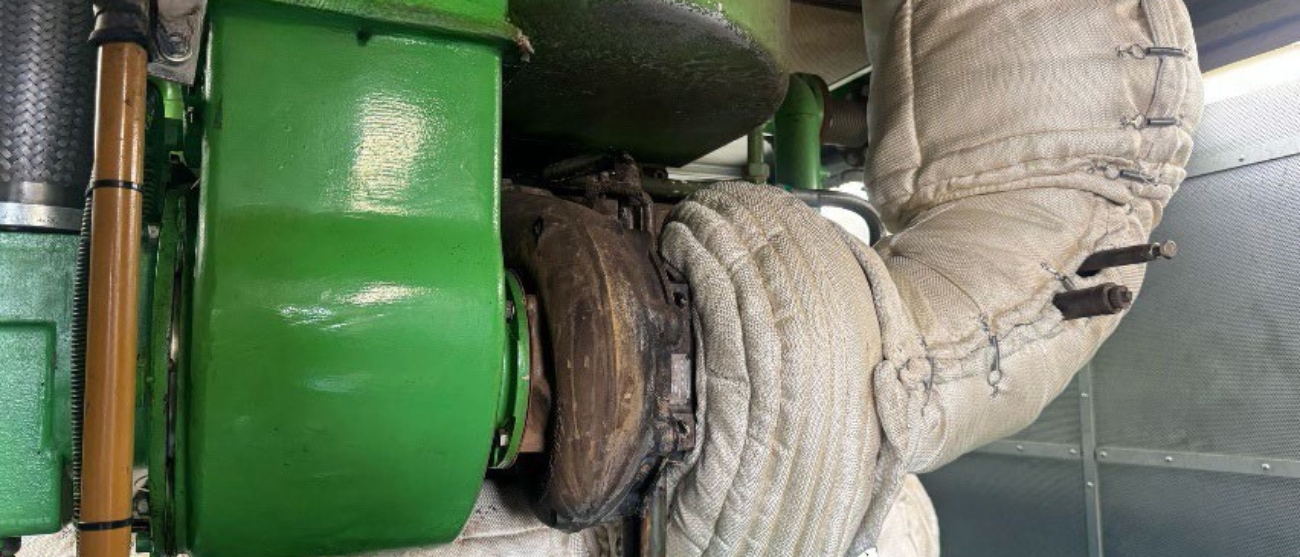
During the disassembly of insulation systems, there is a possibility of exposure to calcium chromate. This can occur if the insulation elements and/or materials used, contain calcium or calcium oxides and have been in contact with hot components containing chromium at operating temperatures above 300°C. Likewise, other manifestations in the form of sodium or potassium chromate cannot be ruled out either.

If yellowish dust is visible within the insulation or on the previously insulated component during removal of the insulating elements, a rapid chromium test should be performed immediately, and in case of a positive result, its presence should be reported and a decontamination performed.

First of all, disassembly of insulation should be carried out by personnel in charge and properly trained to do it.

In general, it is advisable to be careful if you have to handle insulation materials that have already been used, and to consider that any cleaning of the machine must be carried out by companies which are responsible for doing it safely.

Also remember that already used insulation materials are considered contaminated and must be disposed of properly.

Want to improve comfort and performance in your plant with a tailored solution?