Hidden sources of waste are common in industrial plants, and energy losses are among the most frequent.
Energy efficiency is not about assumptions—it’s about data. Understanding where energy losses occur, how much they cost, and how much can be saved turns a hidden expense into a tangible opportunity for improvement.
For industrial plant managers, having this information means prioritizing investments based on real return on investment, optimizing resources, and making decisions backed by measurable data. The case presented in the video is a clear demonstration of this approach.
If you want to identify where your plant is wasting energy and make informed decisions based on reliable data, contact us to schedule a TipCheck audit. Ensure your plant insulation is efficient, safe, sustainable, and built to support your competitiveness.
Export Sales Manager
Contributes to the development of textile solutions for thermal insulation and industrial protection. Collaborates in the engineering of expansion joints, insulating cushions, and passive fire protections, overseeing every phase of the process to ensure efficiency, precision, and reliability in the energy sector.
Before planning insulation work, many companies believe they already know their plant inside out. After all, they work there every day. They know where the pipes are hot to the touch, where the air is heavier, where you can feel the heat from a distance.
However, this familiarity can be misleading. Knowing a system is not the same as having a complete picture of its energy status. And without that picture, any decision risks being based on impressions rather than concrete facts.
Insulation work on industrial plants may seem like a minor technical operation. In reality, it has significant strategic importance: it reduces heat loss, improves the overall efficiency of the plant and keeps operating costs down over time. We are talking about work that may involve pipes, valves, flanges, tanks, heat exchangers, or any component exposed to significant temperatures.
When well planned, they bring immediate and measurable benefits. But if they are based on incomplete or inaccurate information, there is a real risk of: investing in the wrong areas, underestimating the real priorities, or designing solutions that do not work as they should.
What you need is a technical picture, a snapshot that shows where energy is being lost, how much is being lost and what the real priorities are.
No assumptions. No rough estimates. Just rigorous mapping based on measurable data and thermographic analysis.
Because only when you have this snapshot you can make an informed decision about whether to take action, where to do so, and what return to expect.
The 7 pieces of information that distinguish a technical picture of the system from a quick glance
A serious energy audit is not limited to walking around the system with a thermal imaging camera. It collects a series of in-depth information that makes the difference between an effective intervention and one that does not produce the desired results.
Below is the information that should emerge from a well-done analysis.
1. Which parts of your system need insulation
Not all components are the same and not all require the same type of attention. An accurate analysis pinpoints exactly where insulation is completely missing, where it has been damaged over time, where it has only been partially installed and where it is simply old and no longer effective.
This mapping allows you to focus resources and energy on the points that have a real impact on consumption, without wasting budget on marginal interventions.
2. Which components are examined
The analysis does not stop at the main pipes. It covers the entire heating system: pipes of all diameters, valves, flanges, pumps, filters, tanks, heat exchangers, expansion joints. Any element that operates with hot or cold fluids and that could be a source of dispersion.
The more thorough the investigation, the more reliable the final picture.
3. What is your current energy consumption?
Knowing how much you are consuming today is the starting point. But even more important is understanding how much of that consumption is related to avoidable losses. The analysis quantifies energy losses through thermographic measurements and engineering calculations that take into account surface temperature, component size, and operating conditions.
4. What energy savings are realistically achievable?
The audit calculates potential energy savings in terms of kWh or MWh per year, providing objective data that allows you to assess whether the investment makes sense from a technical and economic point of view.
5. How much CO₂ reduction can you expect?
Every kWh that is not wasted also translates into lower carbon dioxide emissions. The analysis quantifies this environmental impact, providing a clear picture of the contribution to corporate sustainability. This is an increasingly important aspect, both for regulatory and reputational reasons.
6. How much money can you save?
Energy savings are translated into annual financial savings based on the company’s specific energy costs. Once the project has been studied, this information will be useful for evaluating the return on investment in concrete terms and making financially sound decisions.
7. Where are you losing energy
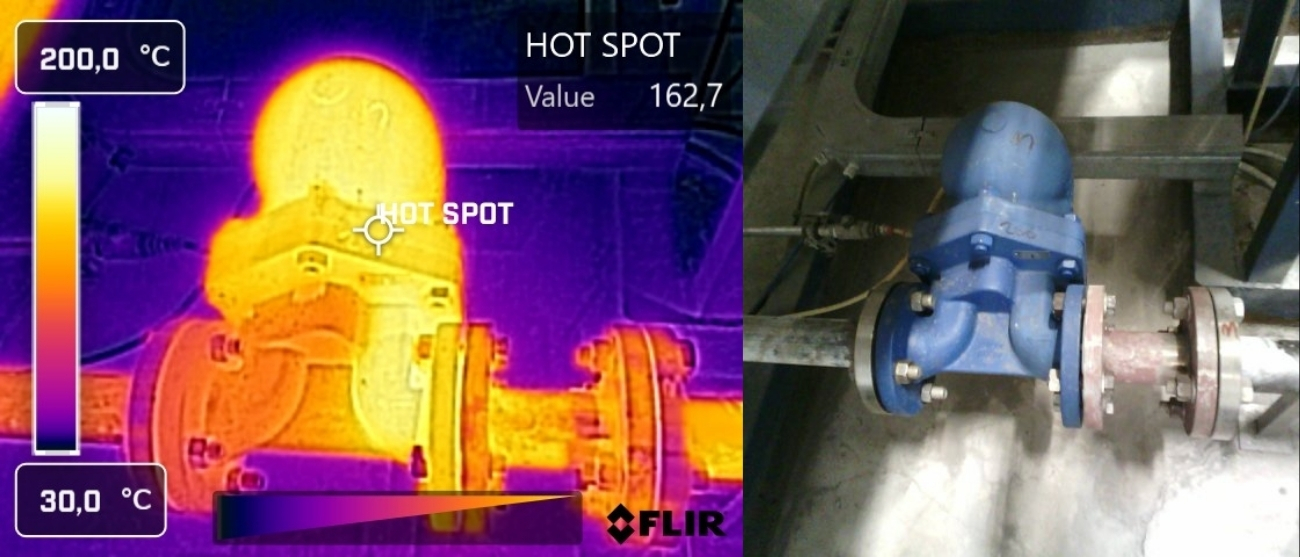
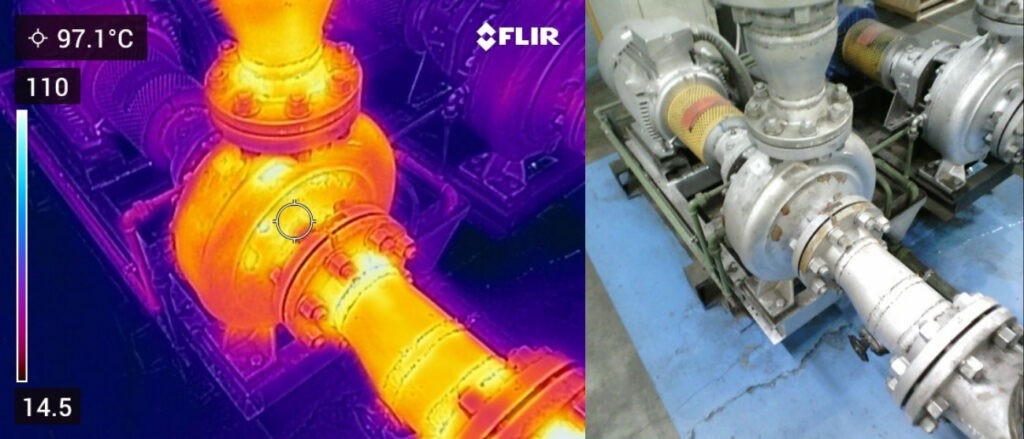
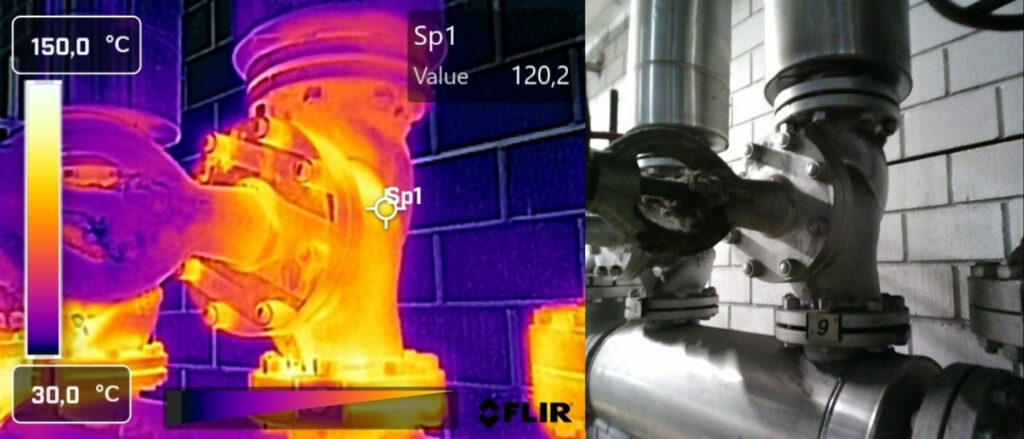
The most visible part of the analysis is the photographic and thermographic report. Infrared thermography clearly shows the areas where heat is being lost, making the situation immediately understandable. These images speak for themselves.
This picture has a name: TipCheck
TipCheck is the standardized energy audit developed by New Componit, an accredited member, since 2019, of EIIF ( European Industrial Insulation Foundation).
Thanks to this certification, New Componit conducts energy audits with personnel qualified according to EIIF standards. The goal is to provide companies with an accurate diagnosis of the energy status of their plant, with objective data on which to base informed decisions: not impressions, but concrete numbers that show where, how much, and why energy is being wasted.
TipCheck quantifies the potential energy, environmental and economic savings in an objective and comparable way. It avoids wasting resources on non-priority or poorly dimensioned interventions. It transforms uncertainty into a strategy.
With this snapshot in hand, you may also decide not to take action. But at least you do so with full awareness. Or you can choose to improve the energy status of your system. In that case, you know exactly where, how much, and with what expected return.
If you want to learn more about how much you are wasting and how much you could save, request our TipCheck !
Start thinking of cleaning as an invisible but continuous activity that works alongside you. Production doesn’t stop. Neither does cleaning.
Project Engineer
Level 2 TIPCHECK Expert, he puts his technical expertise at the service of customers to deliver reliable, high-performance, and high value-added solutions for industrial plants.
Until now, evaluating the efficiency of an industrial technical insulation system was often based on assumptions, estimates or generic parameters.
As of December 1, 2024, with the entry into force of EN 17956:2024, companies finally have an objective, measurable and independent tool to evaluate the energy performance of their insulation system.
This is a paradigm shift that can transform an often neglected area, of the system, into a concrete lever of performance, sustainability and competitiveness.
What the standard EN 17956:2024 provides and why it marks a turning point
EN 17956:2024 is a European standard designed to bring transparency, comparability and scientific method to the evaluation of technical insulation systems.
At its heart is an energy rating system that assigns a score from A (highest efficiency) to G (lowest), based on the density of heat loss flux.
In practice: the more effective an insulation is at retaining energy, the higher its class will be. On the other hand, if it lets too much heat through (beyond the maximum value of class F), it will be classified as G.
This methodology represents a revolution for several reasons:
It is independent of the material used, since it evaluates the actual performance, not the brand or type of insulation.
It is applicable to any geometry, such as piping, flat surfaces, special components and any other shapes found in complex industrial plants.
It covers a wide temperature range, from -30°C to +650°C.
It is replicable and comparable, so any company can get a consistent and comparable assessment with that of other operators or plants.
For companies, this is a clear opportunity: to know exactly where, how much and why they are losing energy, in order to take targeted action.
But how does the EN 17956:2024 standard apply in practice? We look at it in the next few lines.
How the method works (and what it allows you to do)
The classification process according to EN 17956:2024 is structured in four key steps, designed to accompany the company from goal setting to reading the results.
1. Selecting the efficiency class
It always starts with a strategic choice: What is the level of energy efficiency I want (or can) achieve?
Choosing the desired class (from A to F) allows you to calibrate the intervention according to the expected ROI.
2. Identifying the process temperature
Every plant has specific operating conditions. By indicating the operating temperature, you can calculate the thickness needed and the most suitabletype of insulation to fall within the selected class.
3. Defining the geometry
The shape, size and type of the surface or component to be insulated (pipes, surfaces, flanges, etc.) are specified. This step is essential for reliable simulations.
4. Interpretation of results
The system returns the maximum allowable dispersion value for the chosen class, along with an indication of the minimum space required to meet it. This way you can check whether your current insulation is adequate–or how far you are from your goal.
From “technical cost” to strategic lever: the benefits for your company
Too often technical insulation is treated as a passive item in maintenance budgets, with invisible losses that, on a European scale, translate into huge economic costs every year.
Adopting EN 17956:2024 means changing your perspective:
You can accurately measure the efficiency of your insulation, with real data, not assumptions.
You can identify critical points in your system and plan a revamp with a measurable return on investment.
You can compare different solutions, without relying only on data sheets or sales brochures.
You can demonstrate compliance with regulations such as EED and IED, which are increasingly central to sustainability policies.
And above all: you can reduce consumptionand costs, improving competitiveness and reducing your environmental footprint.
Do you want to know how to apply EN 17956:2024 to your plant ?
At New Componit, we can support you step by step: from the initial assessment to the performance simulation and the proposal of tailor-made solutions to meet the highest standards.
Get in touch with us to request a simulation based on the TIPCHECK method, our energy diagnosis protocol useful for identifying heat loss and quantifying potential savings.
You’ll find out where you’re losing energy and how much you could really save.
Because today, insulation is no longer just protection.
It’s a competitive advantage.
Want to improve comfort and performance in your plant with a tailored solution?
More and more frequently we hear about Tipcheck, the energy audit. Especially those who work in chemical and pharmaceutical fields will have already heard about it and know the opportunities for energy savings that open up with this analysis.
Although the issue of energy saving is increasingly topical, also because of: increase of price and EU sustainability objectives, many companies still have doubts about this opportunity.
In particular, many people ask themselves: what an energy efficiency implies in practice, what benefits it entails but also what is the initial investment, as well as what is the repayment time.
So let us clarify.
Let’s start from Tipcheck, which, as I said, is an energy audit on plants, which has the scope of drawing up a detailed report about the possible thermal insulation interventions to be implemented in order to reduce energy consumption, achieving real and measurable energy savings.
It is a standardized instrument put in action by the Eiif, the European Industrial Insulation Foundation, with the aim of providing the industrial sector with tools and solutions to save energy and reduce CO2 emissions.
The audit can only be carried out by Eiif’s partner companies, which have been accredited by the certifying agency. This last point may seem obvious but it is not.
In fact, when a matter, such as energy saving, becomes so topical, there are many competent subjects or not who want to “sell” the ideal solution to save on bills.
So my first advice is: pay attention to the interlocutor with whom you choose to collaborate!
The advantages of Tipcheck
The Tipcheck audit highlights how a series of insulation interventions can bring immediate benefits to the company, such as:
reducing production costs;
increasing energy efficiency;
reduction of CO2 emissions;
improving process efficiency;
reducing risks to personnel and equipment;
increasing of business competitiveness.
But I want to remind you that Tipcheck is an audit, so a first step towards energy efficiency, which then a series of concrete insulation interventions should follow.
Furthermore, Tipcheck follows a standardized analysis protocol; therefore, when you reach the implementation step of the recommended indication stated in the report, it is suggested to collaborate with a supplier able to understand the specific needs of your plant and therefore propose the ideal solution.
I say this because recently we at New Componit worked with a company, in the tanneries field, for which we carried out a detailed energy analysis followed by a tailor-made intervention.
We have, in fact, installed insulating jackets in several hotspots which led to energy savings even higher than their expectations.
I finish by saying that, if today there are still many doubts about the benefits of insulation, I think that the Tipcheck is a great tool to overcome some unfounded reservations and evaluate the economic return (and not only) of an investment that still may scare some companies.
We at New Componit are official members of the Eiif (European Industrial Insulation Foundation) since 2019; our accredited staff has been certified to carry out plant inspections and draw up energy-saving insulation studies.
We aim to find insulation solutions, designed according to specific customer needs, focusing on three key factors:
the temperatures;
the reduction of emissions into the atmosphere;
the resulting economic savings.
Want to improve comfort and performance in your plant with a tailored solution?
Your company could be wasting energy and losing money every minute of its operation.
Who is the culprit? Poorly insulated or not insulated pipes, valves and equipment.
Our specialist can provide you with a technical report about the performance of your system: the “tipcheck” energy audit will show you benefits and future savings, before even starting the project.
Want to improve comfort and performance in your plant with a tailored solution?
The reduction of heat loss leads to inevitable energy savings and, before designing an insulation solution, it is normal to wonder how much it is worthwhile to perform thermal insulation and how to achieve it, in relation to a possible return on investment, future gain and optimization of the plant
Therefore, limiting the heat loss of a system does not mean only obtaining savings directly proportional to the energy that is not lost: it also means increasing the performance of the whole system, improving the final result.
How to choose the most convenient insulation?
If you choose the traditional fixed insulation, you have to take into account that, during the maintenance step, the insulation must be completely dismantled.
Therefore, if after the inspection you have to put again the coating, some parts will certainly need to be replaced and this means extra costs.
Furthermore, there is always the risk that a fixed insulation dismantled and then reapplied will not be as efficient and functional as it was at the beginning.
To keep optimal the thermal insulation, a valid alternative for parts such as valves, filters, flanged couplings, small sections of pipe and heat pumps could be a removable fabric insulation.
This solution allows you to carry on all the necessary maintenance, because it can be easily removed and reapplied, without changing its performance.
By choosing removable insulating jackets, you will not have to incur extra costs after each inspection. There will therefore be direct savings and a greater guarantee of thermal insulation over time.
However before choosing a thermal insulation solution rather than another, it is necessary to dwell on a further fundamental consideration:
How much do you save ?
To calculate the energy savings over time, mathematical formulas are used, they take into account multiple parameters, even if, in general, it can be said that the better isolated the system is, the lower the energy expenditure will be.
Economic savings will therefore be linked to factors such as :
Thermal performance of the insulation;
DT of system;
Surface area that will be isolated.
Type of circulating fluid and its emission coefficient
System operating time taken into consideration
Energy cost
Taking into account all the points above, you can make an estimate of the actual savings.
To make such a calculation, the best way is to contact an expert specialized in insulation, who will be able to solve any doubts by providing you with custom-made advice.
New Componit: the specialist in removable insulation
If you are looking for expert and prepared people, who can find the best solution for your system, we can help you!
We are oriented towards innovation, but we have over 35 years of experience in the most advanced solutions for industrial protection and insulation systems.
Our insulation removable jackets are the best alternative to traditional insulation, to guarantee optimization and long life to your systems.
Before designing a custom-made proposal, we carry out an analysis of the situation and study the most effective solution to increase the performance of your system.
This is possible thanks to Efficiency Box® our special program, which offers a series of services designed to meet any type of need in order to make more efficient and safer the production systems of all our customers.
Efficiency Box® includes:
Plant monitoring,carried out directly by a NEW COMPONIT skilled technician.
Design and supply of simple but technologically advanced solutions.
Installationby New Componit staff or supervision on site.
Direct assistance and prompt intervention by freephone number
Warranty extension to 4 years, if the removable insulation has been assembled by NEW COMPONIT staff.
Want to improve comfort and performance in your plant with a tailored solution?
Sales Engineer
Coordinates the development of the Textile Products division, focusing on the analysis of new sectors to approach and the commercial and marketing strategies to implement.
You can accept, reject, or customize the cookies by clicking the desired buttons.
By closing this notice, you will continue without accepting.
By accepting, you acknowledge that your personal data may be collected for the purpose of personalizing and measuring the effectiveness of advertising.



 Export Sales Manager