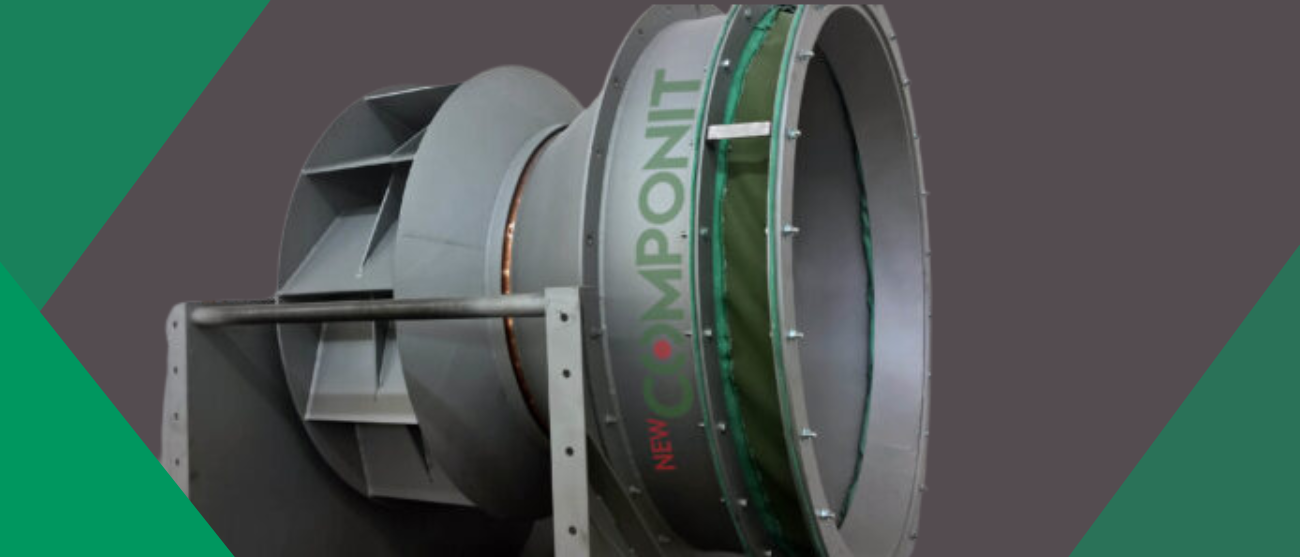
“There is always the right expansion joint, even for the most extreme conditions.”
We at New Componit have been repeating this expression for quite some time, and in the light of our nearly 30 years of experience, we can state with conviction that there are expansion joints capable of withstanding any condition but, beware, they must be designed with certain caution.
In fact, in order to perform at its best, the expansion joint must be designed and manufactured according to the required operating conditions, which determine its technical characteristics.
To identify the most suitable fabric expansion joint for your application, you need to take into account:
- temperature;
- pressure;
- chemical composition of the fluid;
- movements;
- need for thermal abatement;
- need for sound abatement.
When we have this information , it becomes easier for us to design the perfect expansion joint for you.
In light of this premise, we thought we would create a short and simple guide that can help you identify the component best suited to your needs.
1. High temperatures environments
In high-temperature environments, the expansion joints have to maintain their mechanical and structural properties even when heat conditions become extreme, without suffering deformation or loss of performance.
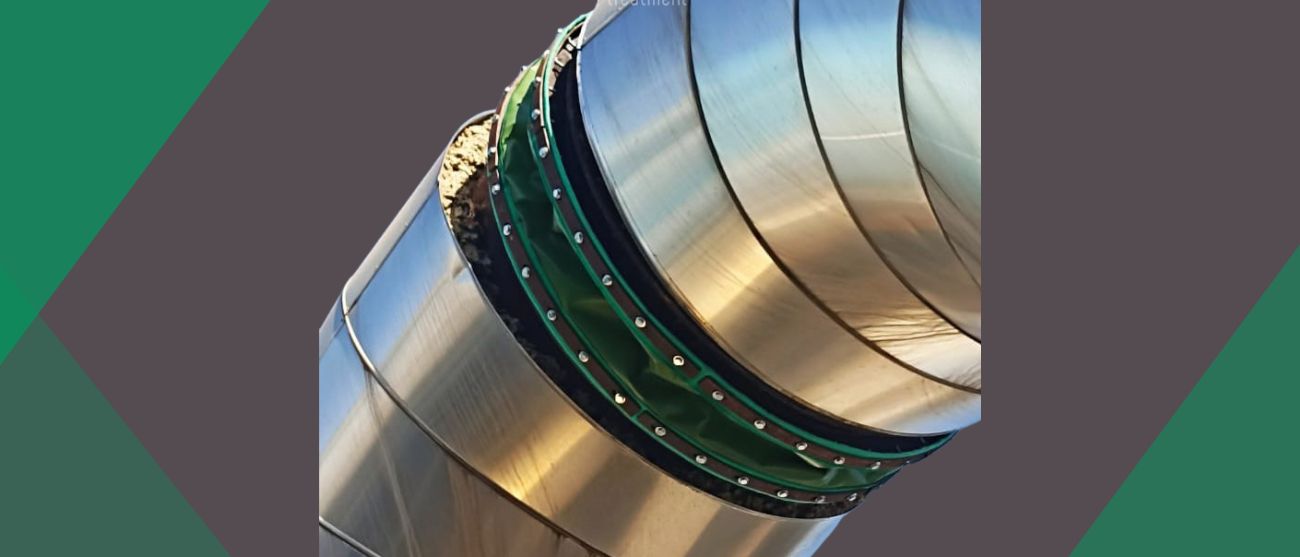
If you operate in high-temperature conditions, you should opt for multilayer textile expansion joints or metal joints; of course, the specific choice also depends on the other requirements of your plant and the system to which the joint will be applied.
For example: we at New Componit ( specialized in customized textile solutions for heat and temperature change problems) make several lines of textile expansion joints suitable for flue duct systems that work at high temperatures and each of these lines is designed for a specific application.
In particular, if you need an expansion joint for very high temperature flue ducts, operating in chemically aggressive environments, you can choose joints from the Petroflex line. These textile expansion joints offer maximum resistance to extreme temperatures, reaching up to 1300°C.
With the same chemical resistance needs, but applying the expansion joint to flue gas exhaust ducts, the most suitable textile expansion joint is instead part of the Powerflex line.
If, on the other hand, you need expansion joints that withstand high temperatures to be applied to the walls of industrial boilers, the Piperflex line is the right solution: these products offer maximum compensation of movements ( axial and lateral) at the same time, even at temperatures of 850°C, making them ideal for wall, roof and bottom penetrations of industrial boilers.
As an alternative to multilayer textile expansion joints, if you operate at high temperatures, you can choose a metal expansion joint: these compensators are made of metal, such as : steel or special alloys; this makes them particularly robust, withstanding high loads, high temperatures and significant pressures.
2. Resistance to pressure and mechanical stress
We have already seen that metal expansion joints are very strong and therefore particularly suitable for operating under high pressure conditions; but there are also textile expansion joints designed to be particularly resistant to mechanical stress.
Textile expansion joints that must withstand pressure are of the multilayer type; in fact, the multilayer design allows different materials to be combined in order to improve the performance of the expansion joint.
In particular, we at New Componit have designed textile expansion joints that are mechanically strong while having strong chemical resistance, thanks to the use of “laminated” fabrics that combine the characteristics of technical fabrics based on glass fiber and fluoropolymers with PTFE cast films.
In fact, joints from the Turboflex line are the best solution for you, if you need a compensator that is particularly resistant to pulsation and erosive phenomena related to turbulence and high smoke velocity.
3. Aggressive environments requiring special chemical resistance
In chemically aggressive environments, corrosion resistance becomes a fundamental necessity: the presence of corrosive chemicals can rapidly deteriorate expansion joints made of inadequate materials, leading to premature failure.
For applications in such environments, it is important to choose expansion joints made of materials that can ensure that the chemical, physical and mechanical properties of the compensators themselves will remain intact over time.
At New Componit, we have designed a line of textile expansion compensators suitable for applications in desulfurization or denitrification plants, where significant concentrations of acid condensates or dust accumulations occur.
In fact, for the construction of the textile expansion joints in the Chemflex line, we carefully selected materials that protect the compensators from the chemical attack of corrosive compounds, ensuring a long service life.
Chemflex joints are generally single-layer and made on a glass fabric or wire cloth and coated with PTFE; this type of composition ensures maximum chemical resistance, but also excellent pressure resistance.
Alternatively, Acuflex elastomer expansion joints are the perfect solution, even better performing in particularly aggressive environments: Viton is a favorite compound, but we also handle neoprene and EPDM.
As you may have already realized, taking into consideration only three factors (temperature, pressure and chemical resistance) the possibilities are many and that is why we always insist with our customers on the importance of product customization: in fact, it is the operating conditions and the performance required of the product that determine its characteristics.
Don’t miss the second part of this guide, where we will discuss the most suitable expansion joints if you need thermal, acoustic or large movement compensation.
At New Componit, we are specializes in textile solutions that can solve problems related to heat, temperature change, noise and fire. For more than 35 years we have been taking our engineering expertise all over the world, measuring ourselves against all kinds of critical issues in plants that develop extreme temperatures and finding ever more innovative solutions.
Want to improve comfort and performance in your plant with a tailored solution?
 Sales Manager
Responsible for commercial management and the development of business opportunities in the fields of industrial insulation and expansion joints.