
In an industrial plant, every part has a role to play, but not all of them receive the attention they deserve.
Textile expansion joints, for example, are often perceived as a minor detail.
They are inexpensive compared to the rest of the plant and can be replaced quickly… but if installed incorrectly or neglected, they can cause plant downtime costing hundreds of thousands of euros.
In such delicate situations, the real competitive advantage lies not only in the product, but in those who know how to install, check, and maintain it: technical service.
The problem is not just the failure, but when it happens
Many industrial plants—power stations, cement factories, steel mills—operate continuously, with scheduled shutdowns only at certain times of the year.
A sudden failure, such as that caused by a damaged or poorly installed textile expansion joint, gives no warning and can result in:
- costly production downtime,
- heat and efficiency losses,
- long recovery times,
- unforeseen expenses.
This is not an exception: it is a recurring situation.
And every time, it could have been avoided.
When we say that a poorly installed or overly worn expansion joint can cause an entire system to shut down, we are not trying to cause alarm.
We say this because we see it every day on the field.
One of the most recent examples? An inspection at a thermoelectric power plant.
During the inspection, we detected—thanks in part to thermography—a deteriorated expansion joint that was already showing clear signs of failure.
We notified the customer and suggested replacing it during the planned plant shutdown scheduled for those days.
The response was: “Let’s wait a little longer.”
But, as we feared, the expansion joint failed earlier than expected.
The plant was shut down for five days, resulting in significant production losses and all the inconveniences that this entails.
We intervened to fix the problem, but the truth is that this shutdown could have been avoided.
That is why we continue to insist on one key point: preventive maintenance is not a cost, but an investment that protects the plant and ensures operational continuity.
Narrow spaces, tight deadlines, minimal margins for error
Installation work is never carried out under ideal conditions.
In boiler rooms or ducts, operators work in confined spaces, often with reduced visibility and limited access.
It is in these contexts that the quality of service makes all the difference.
Every step—from positioning the expansion joint to the final heat sealing—must be performed with surgical precision, because a mistake can compromise the seal, reduce the component’s useful life, and cause leaks.
That’s why, according to the technicians interviewed, the durability of an expansion joint depends 99% on the quality of the installation.
Don’t wait for it to break: how preventive maintenance works
Many plants only start monitoring expansion joints when the first obvious signs of deterioration appear.
But a reactive approach always exposes you to lower risks.
The recommended method involves:
- Regular visual inspections to identify signs of wear.
- Infrared thermographic surveys to measure heat loss.
- Scheduled replacements during plant shutdowns to avoid sudden failures.
That’s why New Componit doesn’t just supply industrial textile expansion joints.
It intervenes directly in the field with a comprehensive, specialized service that includes:
- Installation in critical areas, by expert operators.
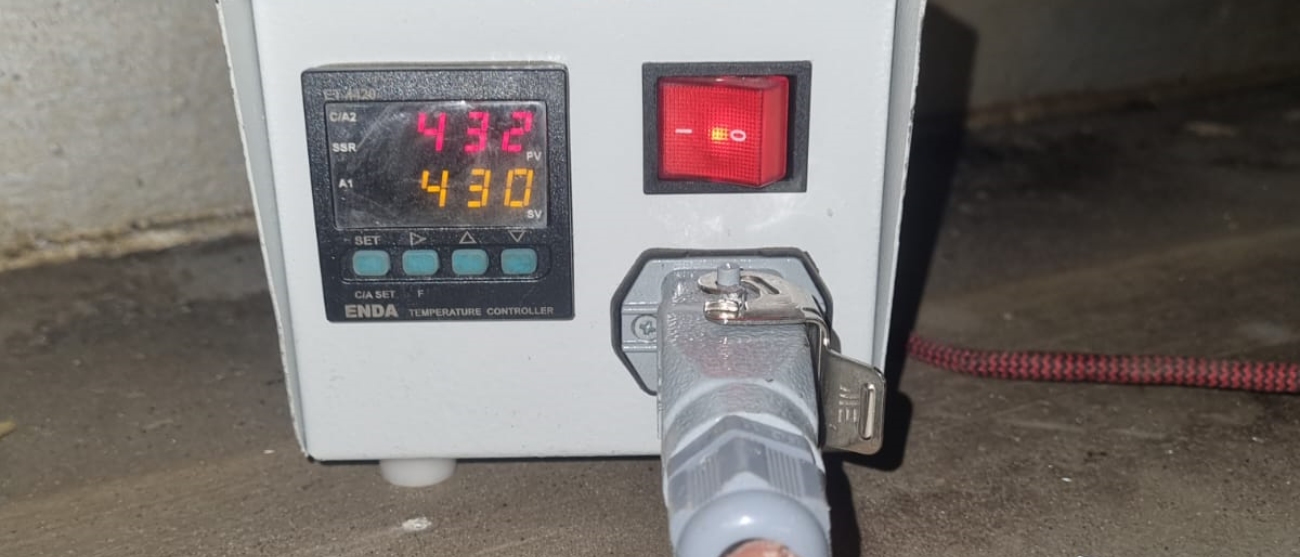
- Perfect heat sealing, carried out at 430–450°C for 3–4 minutes with controlled pressure.
- Maintenance support, from thermography to complete check-ups.
- Worldwide assistance, with teams operating in various industrialized countries.
- On-site training and supervision services, to also support the customer’s internal staff.
It is this approach that makes the difference between a component that works and a system that performs.
Do you want to avoid downtime and ensure maximum performance?
If you are planning maintenance or need to replace your textile expansion joints, consider a technical partner who can assist you every step of the way.
Contact the New Componit team today for personalized advice or a technical inspection.
Trust those who install every day, in plants like yours.
Contact us to find out more.

 Customer Service Department
Specialist in metal fabrication and boiler making with extensive experience in the design and construction of heaters and heat exchangers for both the nuclear and conventional sectors.