New Componit

From Efficiency to Safety: Strategies, Benefits, and Real-World Applications of Industrial Thermal Insulation

When visiting industrial plants, you can come across many situations and unforeseen difficulties, like finding sediments on walls.

Usually, sediments on walls are the result of residual unburned powders or stored powders which, if not promptly and adequately removed, tend to solidify and damage the relative equipment or structure.

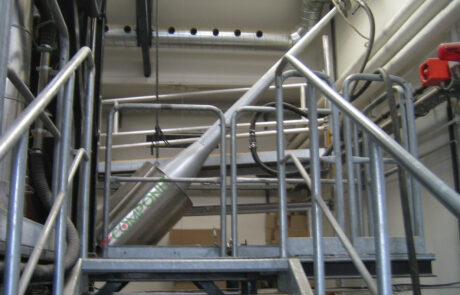
To our customers who have reported this problem, we have recently started to offer the Safefon® sound cleaning system, which is a horn powered by compressed air, whose terminal diffuser, placed inside the structure to be cleaned, is able to remove the dust sediment from walls, through the emission of a sound wave.

Want to improve comfort and performance in your plant with a tailored solution?

How to reduce energy consumption?

How to cut bill costs?

These 2 questions have accompanied us throughout 2022 and are still a current topic in 2023 .

Companies, large or small, are constantly engaged in trying to optimize the process and reduce the consumption.

So what can we do concretely?

In the case of industrial factories, it often happens that the plants waste large quantities of energy, without anyone being aware of it; it seems incredible but it is true and in our work we have met several situations of this type.

In every minute of working, the plant wastes energy, increasing the costs and becoming a source of pollution.

Why does this situation occur?

Inside an industrial plant, there can be “some areas” in which we find a dispersion of heat, which would instead be necessary, for the correct working of the plant and since the necessity of reaching the foreseen temperatures requires energy, it is important to prevent this loss.

First of all it is necessary to check the condition of: pipes, valves, filters or other equipment which may be poorly insulated or, even worse, not insulated at all .

Therefore the thermal insulation of plants is an excellent solution for controlling the energy consumption; however this system has several others advantages, let’s see them together.

1. Reduction of CO2 emissions

With the reduction of energy consumption and heat dispersion, we automatically reduce also CO2 emissions released into the atmosphere .

Therefore, in addition to saving money, a company can also limit the effects of its impact on the environment.

2. Reduction of other company costs

As you know, there are many other costs, in addition to energy consumption, which have an impact on the company financial reports, among these there are expenses related to maintenance of equipment or replacement of worn parts.

If there is heat dispersion in a plant, it is possible that the equipment are working under a stress condition, that ruin them more quickly and then require maintenance or replacement.

3. Increase of safety

Insulation not only protects your workers, from dangers related to hot and cold spots inside the plant, but also from noise. It is then a benefit also in terms of protection of workers’ health.

Fear of initial investment

Despite the above mentioned benefits, companies are often frightened by the costs of installation, or optimization of thermal insulation systems. In this case, it is necessary to look at numbers, reflecting on energy savings and on the recoup times of the investment.

A series of specific studies have been conducted, in order to examine in depth the relationship between the energy savings, obtained thanks to insulation system and the energy consumption necessary to produce it; a few months of use are enough to compensate for these two factors.

It also emerges that, during their life, the insulating jackets can save up to 150 times the energy necessary for their production.

When we talk about thermal insulation, it is important to find solutions designed according to customer’s specific need and which take into account 3 basic points :

  • temperatures;
  • reduction of emissions in atmosphere ;
  • consequent energy saving;

This is the only way to find a solution that leads to real energy efficiency. In these cases we cannot improvise.

New Componit is an official member of Eiif (European Industrial Insulation Foundation) and has obtained the certification to provide the Tipcheck, the energy audit for plants, which has the aim of drawing up a detailed report on the possible thermal insulation interventions to carry out, in order to obtain  real and measurable  energy savings.

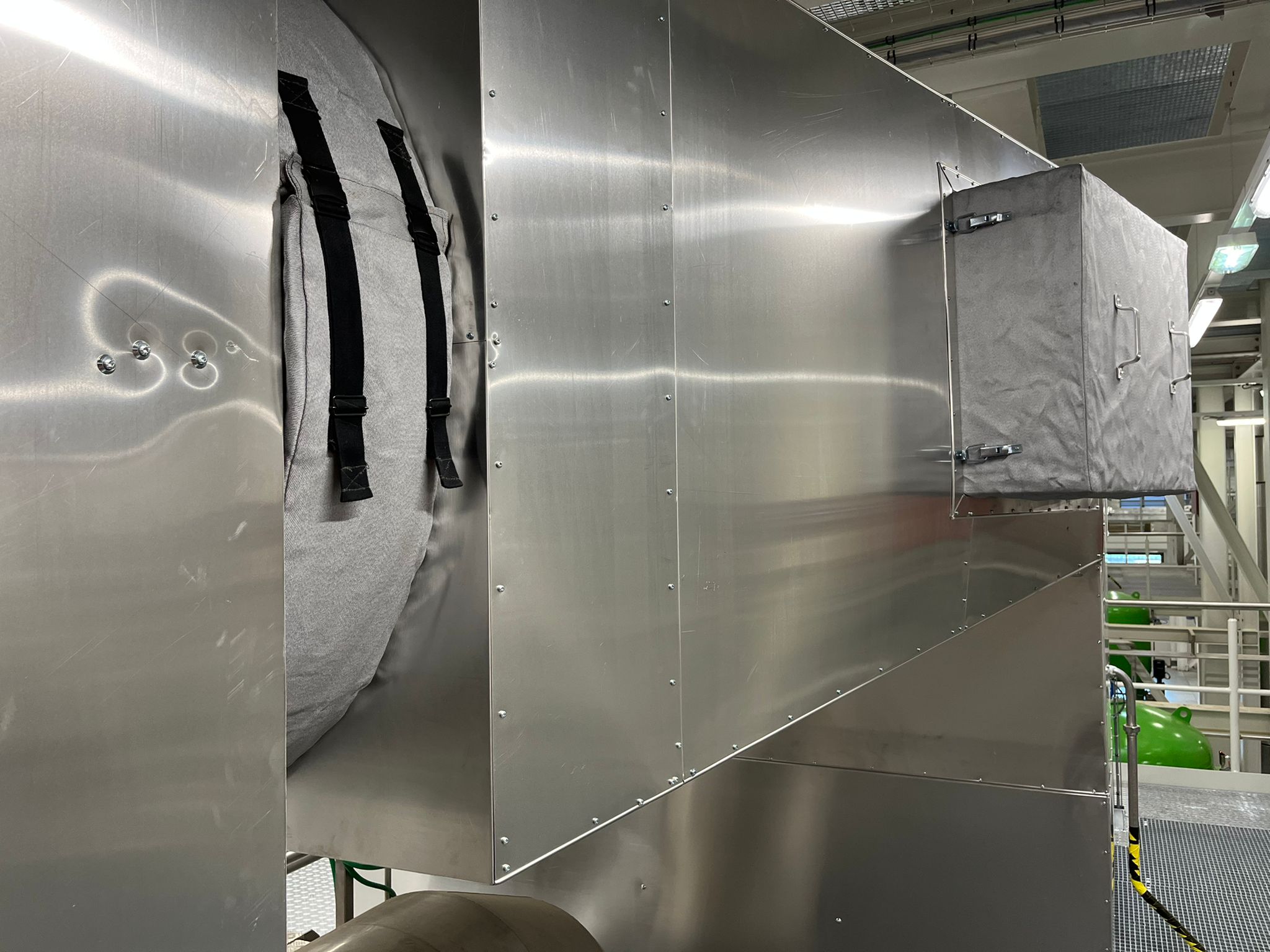
Exactly with an eye on energy saving, NEW COMPONIT has designed Enersave, the thermal jackets for valves and flanges that allow to optimise consumption and  protect the environment.

Enersave jackets can be disassembled and then reapplied and can also be customized according to individual needs.

Want to improve comfort and performance in your plant with a tailored solution?

The tightness of a fabric expansion joint depends on two key factors: the permeability of the materials used and the level of tightness in the flange area.

Multilayer fabric expansion joints with porous textile materials exhibit significant permeability, whereas single-layer fabric expansion joints, especially those laminated with PTFE, have low permeability.

The final outcome is influenced by the pressure exerted by the flange, counter flanges, and bolt size.

Want to improve comfort and performance in your plant with a tailored solution?

The certification that defines the requirements of an Environmental Management System of a company can no longer be seen as something extraneous or parallel to company life.

So what does it mean to have a certified ISO 14001 partner?

There are many advantages of having an Environmental Management System certified by this norm, such as the supervision of environmental performance, the guarantee of systematically approaching environmental emergencies and the prevention of environmental violation, the reduction of waste and many others.

Also New Componit decided to adopt ISO 14001.

Want to improve comfort and performance in your plant with a tailored solution?

In an industrial plant, whatever the sector it belongs to, several problems can arise; some of them are common and therefore easily solved. In other cases, however, may occur problems which are more complex to solve.

This is the case of granular materials: we are talking about that dust, which is formed during the industrial process and which can damage the equipment.

As it often happens, in these situations we tend to postpone a problem that doesn’t seem imminent or whose consequences are not immediately visible.

But it is exactly in these cases that, over time, develop encrustation which risk to compromise the proper working of industrial boilers, silos, furnaces, bag filters, heat exchangers, industrial fans, scrubbers, ducts and bag filter housing.

The industrial fields involved are the most different, just think about:

  • Dust from ceramic industry;
  • Steel dust from foundries or steelworks;
  • Gypsum from cement industry;
  • Dusty substances from food, chemical, or pharmaceutical sector;
  • Combustion ashes from power plants;

The incrustations that form are the result of the presence of unburned powders or stored powders which, if not correctly removed, tend to solidify, risking damaging the machinery or jeopardizing its functioning.

Let’s see some examples together:

  • in industrial fans, the accumulation of deposits on the blades can unbalance the rotor and cause dangerous vibrations.
  • ash deposits in boilers and heat exchangers can clog the pipes;
  • in silos the materials risk depositing and creating blockage.

In all these cases, we erroneously think that the dust removal entails expensive, bulky, solutions, also difficult to install/remove or even worse, that interrupts the production cycle.

New Componit has developed SAFEFON® horns, a sound cleaning system, which, unlike more traditional systems, such hammers, air blowers and mechanical retractors, it is versatile and efficient in removing dust.

The low-frequency and high-intensity sound waves create some internal vibrations, that affect the residual deposits and have a fluidifying effect.

The sound impulses are emitted by a pneumatic generator, their frequency is then modulated by a diffuser which can have different shapes and sizes depending on the application requirements and installation needs.

The Safefon® sound cleaning system:

  • doesn’t cause secondary effects to structures
  • is easy to install;
  • works in a fully automated way;
  • has no unwanted stops;
  • guarantees a reduction in operating and maintenance costs.

Want to improve comfort and performance in your plant with a tailored solution?

Already in 90s New Componit, had been a pioneer among SME in undertaking the certification process for ISO 9001 standard.

Over the last few years, the need to update to ISO 9001 : 2015 has marked the company daily life, setting its goals and focusing above all on customer satisfaction and continuous improvement.

The standard defines the international requirements for the certification of a quality management system in a company.

Want to improve comfort and performance in your plant with a tailored solution?

My Agile Privacy
Privacy and Consent by My Agile Privacy

This site uses technical and profiling cookies. 

You can accept, reject, or customize the cookies by clicking the desired buttons. 

By closing this notice, you will continue without accepting.