New Componit

From Efficiency to Safety: Strategies, Benefits, and Real-World Applications of Industrial Thermal Insulation

“There is always the right expansion joint, even for the most extreme conditions.”

We at New Componit have been repeating this expression for quite some time, and in the light of our nearly 30 years of experience, we can state with conviction that there are expansion joints capable of withstanding any condition but, beware, they must be designed with certain caution.

In fact, in order to perform at its best, the expansion joint must be designed and manufactured according to the required operating conditions, which determine its technical characteristics.

To identify the most suitable fabric expansion joint for your application, you need to take into account:

  • temperature;
  • pressure;
  • chemical composition of the fluid;
  • movements;
  • need for thermal abatement;
  • need for sound abatement.

When we have this information , it becomes easier for us to design the perfect expansion joint for you.

In light of this premise, we thought we would create a short and simple guide that can help you identify the component best suited to your needs.

1. High temperatures environments

In high-temperature environments, the expansion joints have to maintain their mechanical and structural properties even when heat conditions become extreme, without suffering deformation or loss of performance.

If you operate in high-temperature conditions, you should opt for multilayer textile expansion joints or metal joints; of course, the specific choice also depends on the other requirements of your plant and the system to which the joint will be applied.

For example: we at New Componit ( specialized in customized textile solutions for heat and temperature change problems) make several lines of textile expansion joints suitable for flue duct systems that work at high temperatures and each of these lines is designed for a specific application.

In particular, if you need an expansion joint for very high temperature flue ducts, operating in chemically aggressive environments, you can choose joints from the Petroflex line. These textile expansion joints offer maximum resistance to extreme temperatures, reaching up to 1300°C.

With the same chemical resistance needs, but applying the expansion joint to flue gas exhaust ducts, the most suitable textile expansion joint is instead part of the Powerflex line.

If, on the other hand, you need expansion joints that withstand high temperatures to be applied to the walls of industrial boilers, the Piperflex line is the right solution: these products offer maximum compensation of movements ( axial and lateral) at the same time, even at temperatures of 850°C, making them ideal for wall, roof and bottom penetrations of industrial boilers.

As an alternative to multilayer textile expansion joints, if you operate at high temperatures, you can choose a metal expansion joint: these compensators are made of metal, such as : steel or special alloys; this makes them particularly robust, withstanding high loads, high temperatures and significant pressures.

2. Resistance to pressure and mechanical stress

We have already seen that metal expansion joints are very strong and therefore particularly suitable for operating under high pressure conditions; but there are also textile expansion joints designed to be particularly resistant to mechanical stress.

Textile expansion joints that must withstand pressure are of the multilayer type; in fact, the multilayer design allows different materials to be combined in order to improve the performance of the expansion joint.

In particular, we at New Componit have designed textile expansion joints that are mechanically strong while having strong chemical resistance, thanks to the use of “laminated” fabrics that combine the characteristics of technical fabrics based on glass fiber and fluoropolymers with PTFE cast films.

In fact, joints from the Turboflex line are the best solution for you, if you need a compensator that is particularly resistant to pulsation and erosive phenomena related to turbulence and high smoke velocity.

3. Aggressive environments requiring special chemical resistance

In chemically aggressive environments, corrosion resistance becomes a fundamental necessity: the presence of corrosive chemicals can rapidly deteriorate expansion joints made of inadequate materials, leading to premature failure.

For applications in such environments, it is important to choose expansion joints made of materials that can ensure that the chemical, physical and mechanical properties of the compensators themselves will remain intact over time.

At New Componit, we have designed a line of textile expansion compensators suitable for applications in desulfurization or denitrification plants, where significant concentrations of acid condensates or dust accumulations occur.

In fact, for the construction of the textile expansion joints in the Chemflex line, we carefully selected materials that protect the compensators from the chemical attack of corrosive compounds, ensuring a long service life.

Chemflex joints are generally single-layer and made on a glass fabric or wire cloth and coated with PTFE; this type of composition ensures maximum chemical resistance, but also excellent pressure resistance.

Alternatively, Acuflex elastomer expansion joints are the perfect solution, even better performing in particularly aggressive environments: Viton is a favorite compound, but we also handle neoprene and EPDM.

As you may have already realized, taking into consideration only three factors (temperature, pressure and chemical resistance) the possibilities are many and that is why we always insist with our customers on the importance of product customization: in fact, it is the operating conditions and the performance required of the product that determine its characteristics.

Don’t miss the second part of this guide, where we will discuss the most suitable expansion joints if you need thermal, acoustic or large movement compensation.

At New Componit, we are specializes in textile solutions that can solve problems related to heat, temperature change, noise and fire. For more than 35 years we have been taking our engineering expertise all over the world, measuring ourselves against all kinds of critical issues in plants that develop extreme temperatures and finding ever more innovative solutions.

Want to improve comfort and performance in your plant with a tailored solution?

The answer is : it depends on the fabric expansion joint !

Specifically, what makes the difference is the initial choice made during the design phase. Let’s see together what this means.

So my advice is : always specify in your requests for proposals whether in your plant the expansion joints are insulated or not. You will need this to avoid nasty surprises and unplanned plant shutdowns.

Want to improve comfort and performance in your plant with a tailored solution?

There are fewer and fewer maintenance workers in plants, and the number of tasks each worker has to oversee is increasing. In the past, scheduled shutdowns, even of long duration, were periodically planned to carry out several checks and maintenance operations on plant equipment. Today, however, these types of shutdowns are becoming increasingly rare.

At New Componit, we felt it was important to adapt to these changes and offer, in addition to high-quality products, a dedicated maintenance service package. We aim to assist our customers before and after the product supply, as long as they need us. We have translated this 360° approach into a precise service package that we call Efficiency Box®.

Want to improve comfort and performance in your plant with a tailored solution?

In recent months, we at New Componit have decided to tackle the subject of hexavalent chromium in depth through our various channels in order to provide our team and our customers with correct information on the risks; at the same time, we want to provide a timely response to the request for preventive measures to be implemented in industrial plants.

Hexavalent chromium has been a major issue for almost a year and is still being updated: assessments on the hazardousness of hexavalent chromium in industrial plants are still ongoing.

The European Commission’s restriction request.

The European Commission has recently submitted a proposal to the European Chemicals Agency (ECHA) to update the restriction request for hexavalent chromium substances; in particular, 12 more substances will be evaluated in addition to the two already included in the original request of September 2023.

The substances included in the new restriction proposal submitted to ECHA may pose risks to workers and the general public, as well as to the environment, when used as substitutes for hexavalent chromium substances subject to authorisation.

How does the restriction procedure work?

Restriction procedures are essential for the protection of workers, the general public and the environment: an EU Member State, or the European Commission, can propose a restriction if it fears that a substance poses an unacceptable risk to human health or the environment.

The procedure is initiated by submitting the restriction request to ECHA, the European Chemicals Agency; after the request has been checked for conformity, the proposal is analysed by the two ECHA committees:

  • the Committee for Risk Assessment (RAC) prepares its opinion on the appropriateness of the restriction based on the risks to human health and the environment identified for the substance.
  • the Socio-economic Analysis Committee (SEAC) prepares its opinion on the socio-economic impacts of the proposed restriction, then on the basis of the costs and benefits of the restriction.

Once all comments have been received by ECHA, the European Commission makes an overall assessment and updates the restriction list: once the list is approved, the industry, which includes the entire supply chain, is obliged to comply and the EU Member States become responsible for enforcing the restriction.

Latest news on hexavalent chromium

Currently, the restriction procedure for hexavalent chromium substances is still in the analysis phase; the broadening of the scope of the application has in fact led ECHA to postpone the final evaluation and consequently the drafting of the restriction list.

During the analysis phase, ECHA committees may invite interested parties to submit evidence to support the preparation of the proposal; in the case of hexavalent chromium, on 6 June 2024, ECHA discussed the initial findings based on the data initially received and launched a second call for evidence of risks and benefits to support the updated proposal.

Until the final list of restrictions is drawn up, it is important to continue to keep up-to-date on this issue to ensure that you comply with European regulations and protect the well-being of your workers and the environment.

Many substances derived from hexavalent chromium are easily found in industrial plants and are classified as carcinogenic and highly toxic to the environment, with long-term health consequences.

Among the hazardous substances derived from hexavalent chromium, it is good to consider calcium chromate; this compound is formed as a result of the oxidation of chromium with calcium oxide and it is important to prevent its formation in your plant.

How to prevent risks from hexavalent chromium compounds?

Avoiding the use of thermal insulation systems with materials containing calcium, sodium, potassium or their oxides is the first step in securing yourself against risks from hexavalent chromium.

Today, it is possible to prevent the formation of hexavalent chromium compounds, such as calcium chromate, in industrial systems by adopting textile solutions specifically designed for this purpose.

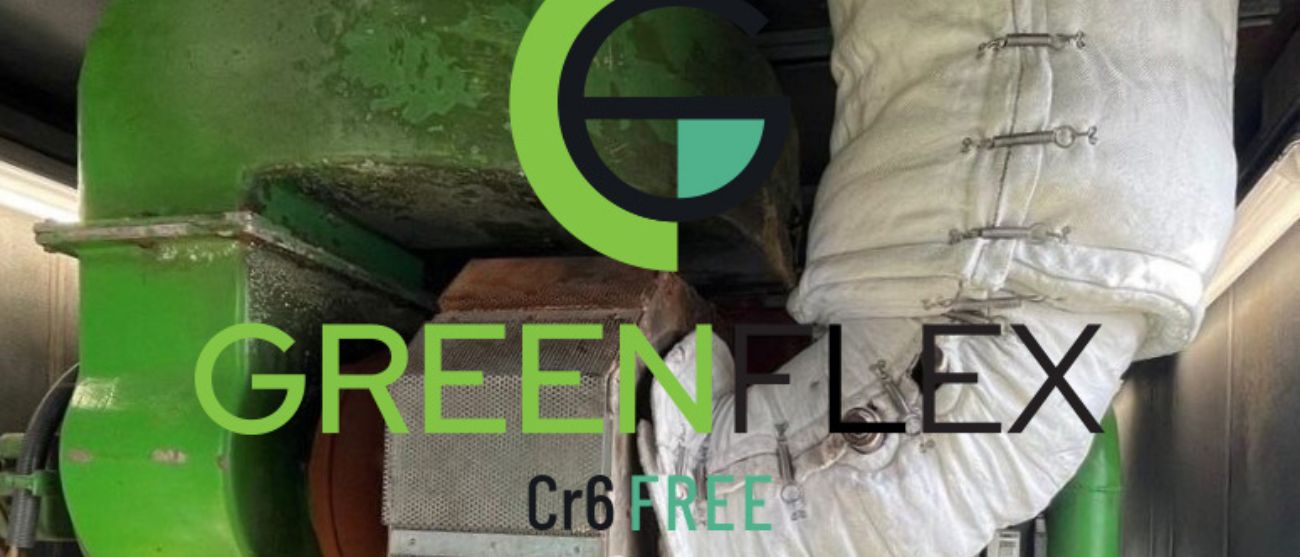
We at New Componit have over the years invested in research and development of textile solutions that prevent the possible formation of hexavalent chromium in industrial plants. In fact, we have included the Greenflex line in our product range, which includes high-temperature insulation systems with calcium-free protection. By replacing textiles and insulation mats containing calcium, our Greenflex textiles do not release toxic substances when used, making them ideal for worker and environmental safety and allowing you to work in compliance with international safety regulations.

Our high-temperature products also help to contain heat, ensuring greater efficiency of insulated equipment: they therefore contribute to cost savings, but above all to a reduction in potential CO2 emissions into the atmosphere, making your plant even more environmentally sustainable.

Want to improve comfort and performance in your plant with a tailored solution?

To avoid the formation of hexavalent chromium, you need to know conditions under which there is possible formation of hexavalent chromium or its compounds and adopt carefully designed systems to prevent the formation of these toxic substances.

The use of calcium-free high-temperature insulation systems takes into account safety for people and the environment, and refers to international regulations on occupational safety and environmental protection.

Textiles from the GreenFlex line, designed to prevent the formation of hexavalent chromium, are ideal for the safety of operators and environment.

Want to improve comfort and performance in your plant with a tailored solution?

In the last few months how many times have you heard about energy saving?

How many and which solutions have been proposed to you to optimize the consumptions of your plant?

I can imagine this is a recurrent topic for you too.

Among the various technological solutions there are different insulation systems which, as you already know, contribute to energy efficiency, offer economic savings and improve the sustainability of your company.

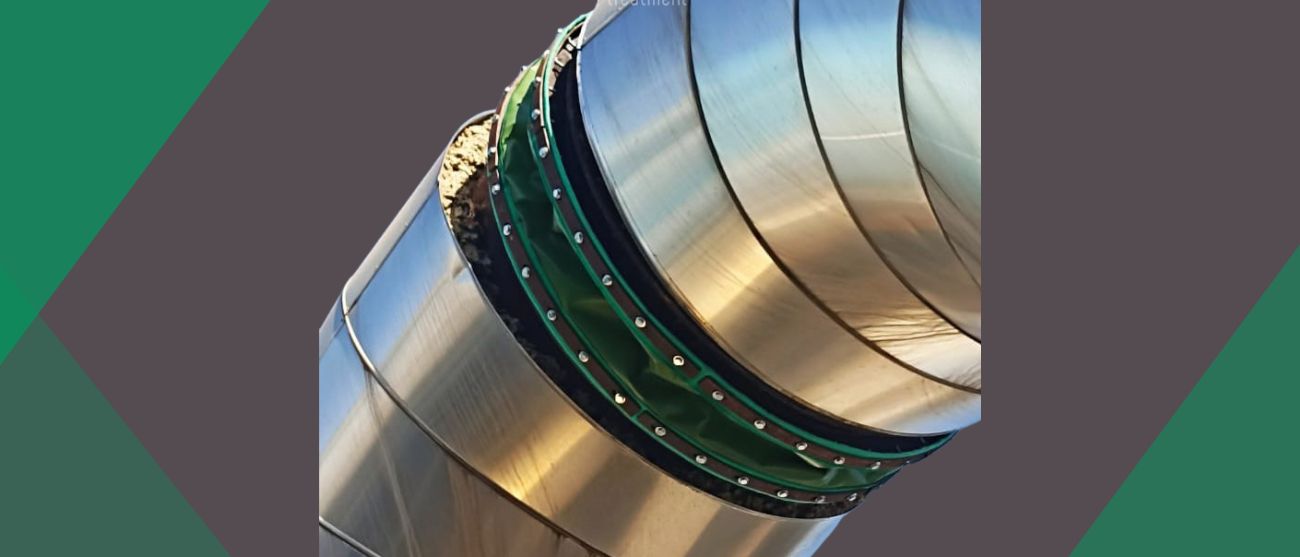
Because of the widespread use of these solutions, many companies often contact us to ask if it is possible to insulate the fabric expansion joints.

The answer depends on the characteristics of the fabric expansion joints. Let’s see in detail.

Standard fabric expansion joints

The fabric expansion joints made in standard execution are designed to dissipate the heat of the internal fluid towards the outside; in this way they can carry out their function as compensators even at very high operating temperatures.

Therefore any element( that prevents or limits heat dissipation ) is added to the standard expansion joint, will shorten the expansion joint life.

In fact, since it was not designed to be externally insulated, it will not be able to dissipate the heat and the fabrics will end up deteriorating quickly; in this condition the fabric expansion joint tends to open and break.

The answer to the initial question seems to be “no”… but there are other solutions to make the insulation compatible with fabric expansion joints.

Compatible expansion joints

If we talk about expansion joints compatible with insulation system, first of all we have to do an important premise: there are several types of fabric expansion joints which among other things can be customized on the specific needs of customers .

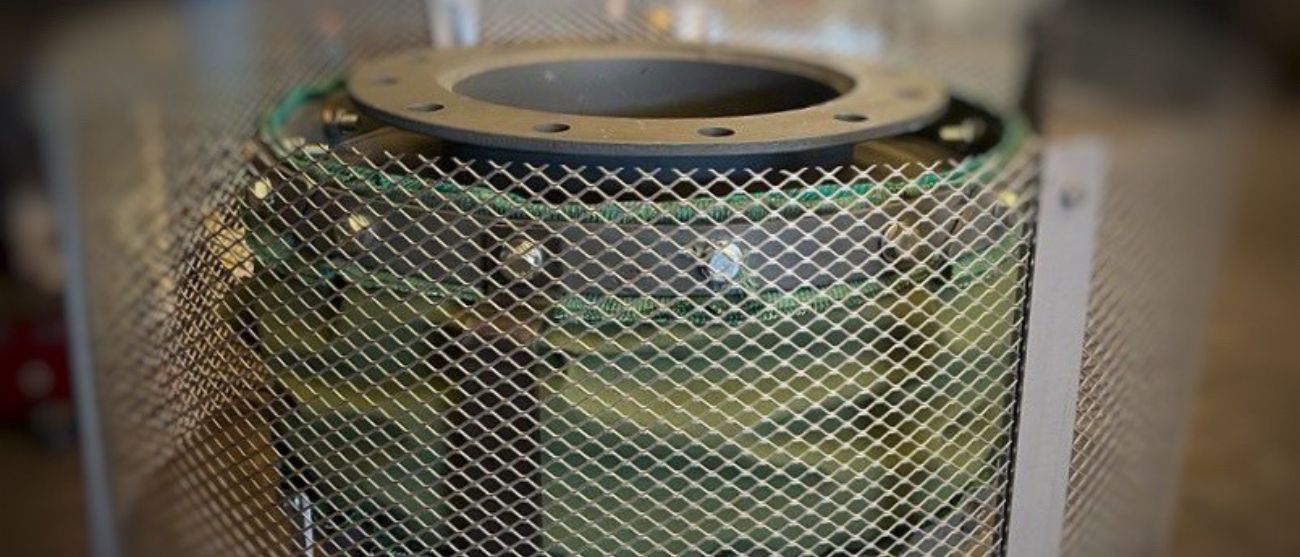
In this case , if during the design step of the expansion joint, the customer specify the presence of insulation, its characteristics etc, the product can be realized with particular materials that do not provide for thermal reduction. Heat dissipation will instead be guaranteed by the external insulation which will subsequently cover the expansion joint.

These two possibilities do nothing but confirm a concept that we at NEW COMPONIT often repeat to our customers : to be sure that the final product perform at its best, all the relevant specifications must be indicated during the request phase.

I return to the initial premise: fabric expansion joints, insulation and many other technologies dedicated to energy efficiency are really effective only if they are conceived and designed on the basis of an initial study of the energy situation and the specific characteristics of the plant;  only in this way it is possible to propose an adequate solution able to guarantee effective results.

We at New Componit specialize in textile solutions capable of solving problems related to heat, temperature changes, noise and fire. For over 35 years we have been bringing our engineering experience all over the world, dealing with all types of critical issues in systems that develop extreme temperatures and finding increasingly innovative solutions.

We offer our customers a tailor-made service, called  Efficiency Box® which allows us to respond to every type of customer need, in order to make production systems more efficient and safer.

Efficiency Box® includes:

  • monitoring of plants, carried out directly by a skilled New Componit technician
  • design and supply of the required interventions with simple but technologically advanced solutions
  • installation with New Componit personnel or assembly supervision
  • direct assistance and prompt intervention by a dedicated toll-free number.

Want to improve comfort and performance in your plant with a tailored solution?

My Agile Privacy
Privacy and Consent by My Agile Privacy

This site uses technical and profiling cookies. 

You can accept, reject, or customize the cookies by clicking the desired buttons. 

By closing this notice, you will continue without accepting.