New Componit

From Efficiency to Safety: Strategies, Benefits, and Real-World Applications of Industrial Thermal Insulation

When working in high-temperature environments, insulation cannot be compromised.

It must be effective, resistant… and above all, safe.

In recent years, more and more companies are choosing a new generation of materials: so-called calcium-free materials, made of high-purity quartz fibre.

Why? Because they can withstand extreme heat without triggering dangerous chemical reactions.

A smart choice — and an increasingly popular one — for those who want not only good performance, but also greater protection for workers, fewer hidden risks and greater regulatory peace of mind.

What are ‘calcium-free’ materials?


They are advanced technical materials, free of components that can trigger unwanted reactions at high temperatures, such as calcium, sodium or potassium oxides.

They are obtained through a chemical purification process that allows a composition of over 95% silicon dioxide (SiO) to be achieved, with the addition of alumina to increase stability.

Compared to traditional insulators – rock wool, ceramic fibres, untreated glass fibres – they offer:

  • Greater thermal resistance (up to 1200°C);
  • Dimensional stability even in aggressive environments;
  • No release of hazardous substances.

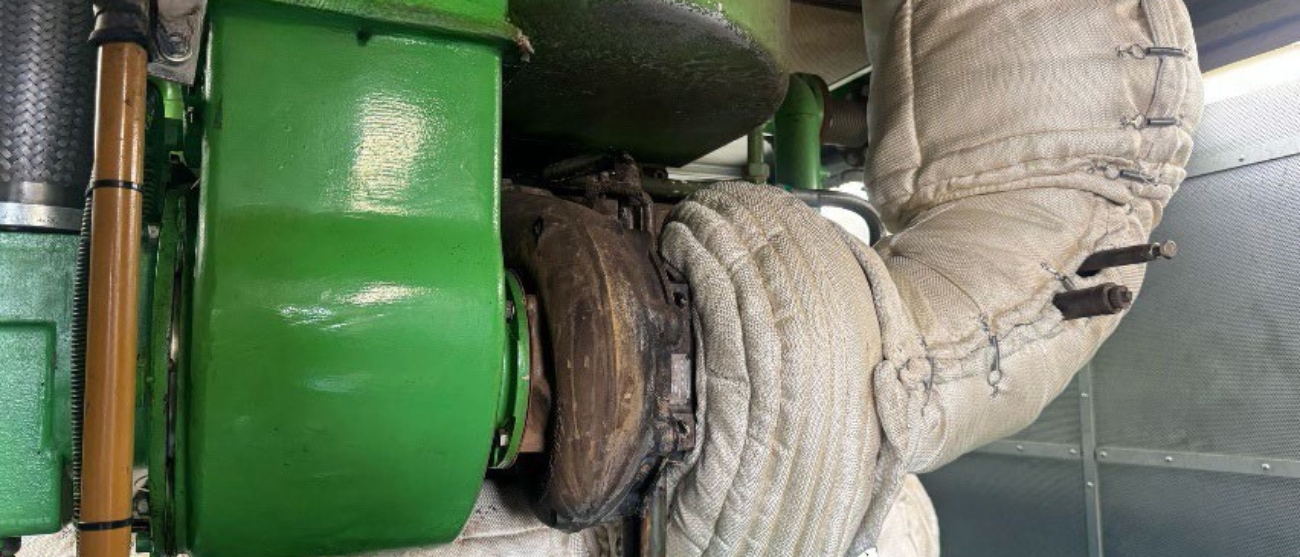
In summary: these materials are designed to protect systems and people, even in critical areas such as expansion joints, turbines, compensators and flanges.

Why are they so important?

Because not all insulating materials are the same.

At certain temperatures, traditional calcium-based insulating materials can react with chromium and oxygen steel, forming hexavalent chromium — a substance classified as a category 1B carcinogen.

With calcium-free materials, this risk is eliminated at source: there is no calcium, so no reaction can occur.

This means:

  • Less exposure for operators;
  • No extraordinary remediation;
  • Greater ease in complying with regulations (such as the REACH Regulation and Legislative Decree 81/2008);
  • Fewer surprises during environmental or HSE audits and inspections.

The advantages for your company

Adopting calcium-free materials means:

  • Reducing the chemical risks associated with the formation of hexavalent chromium.
  • Protecting workers’ health with solutions that are safe even in critical conditions.
  • Streamlining HSE procedures and avoiding costly remediation.
  • Extending the life of insulation even in aggressive environments.
  • Dealing with fewer unexpected events, greater control and regulatory compliance.

It is not just a technical choice.

It is a more conscious, modern and responsible way of working.

Green Flex: More than just a product, a responsible choice

Choosing safer materials means investing in more reliable systems, better protected operators and more robust companies.

And calcium-free materials, such as those used in the production of the Green Flex line, are now the technical standard for those who work at high temperatures and want to eliminate the risk at source.

Green Flex is designed not to generate hexavalent chromium, even in the most critical conditions and to offer stable, long-lasting performance that complies with the most demanding regulations.

Would you like to know if your plant still uses potentially hazardous materials?

Contact New Componit team today for a free consultation.

We will analyse the critical points together and help you choose the right solution to work safely, with more control and fewer unexpected events.

Because good insulation is not just a barrier.

It is a competitive advantage that protects, simplifies and improves every aspect of your operations.

In an industrial plant, every part has a role to play, but not all of them receive the attention they deserve.

Textile expansion joints, for example, are often perceived as a minor detail.       

They are inexpensive compared to the rest of the plant and can be replaced quickly… but if installed incorrectly or neglected, they can cause plant downtime costing hundreds of thousands of euros.

In such delicate situations, the real competitive advantage lies not only in the product, but in those who know how to install, check, and maintain it: technical service.

The problem is not just the failure, but when it happens

Many industrial plants—power stations, cement factories, steel mills—operate continuously, with scheduled shutdowns only at certain times of the year.

A sudden failure, such as that caused by a damaged or poorly installed textile expansion joint, gives no warning and can result in:

  • costly production downtime,
  • heat and efficiency losses,
  • long recovery times,
  • unforeseen expenses.

This is not an exception: it is a recurring situation.
And every time, it could have been avoided.

When we say that a poorly installed or overly worn expansion joint can cause an entire system to shut down, we are not trying to cause alarm.                                 

We say this because we see it every day on the field.

One of the most recent examples? An inspection at a thermoelectric power plant.

During the inspection, we detected—thanks in part to thermography—a deteriorated expansion  joint that was already showing clear signs of failure.

We notified the customer and suggested replacing it during the planned plant shutdown scheduled for those days.

The response was: “Let’s wait a little longer.”

But, as we feared, the expansion joint failed earlier than expected.

The plant was shut down for five days, resulting in significant production losses and all the inconveniences that this entails.

We intervened to fix the problem, but the truth is that this shutdown could have been avoided.

That is why we continue to insist on one key point: preventive maintenance is not a cost, but an investment that protects the plant and ensures operational continuity.

Narrow spaces, tight deadlines, minimal margins for error

Installation work is never carried out under ideal conditions.

In boiler rooms or ducts, operators work in confined spaces, often with reduced visibility and limited access.

It is in these contexts that the quality of service makes all the difference.

Every step—from positioning the expansion joint to the final heat sealing—must be performed with surgical precision, because a mistake can compromise the seal, reduce the component’s useful life, and cause leaks.

That’s why, according to the technicians interviewed, the durability of an expansion joint depends 99% on the quality of the installation.

Don’t wait for it to break: how preventive maintenance works

Many plants only start monitoring expansion joints when the first obvious signs of deterioration appear.

But a reactive approach always exposes you to lower risks.

The recommended method involves:

  • Regular visual inspections to identify signs of wear.
  • Infrared thermographic surveys to measure heat loss.
  • Scheduled replacements during plant shutdowns to avoid sudden failures.

That’s why New Componit doesn’t just supply industrial textile expansion joints.

It intervenes directly in the field with a comprehensive, specialized service that includes:

  • Installation in critical areas, by expert operators.
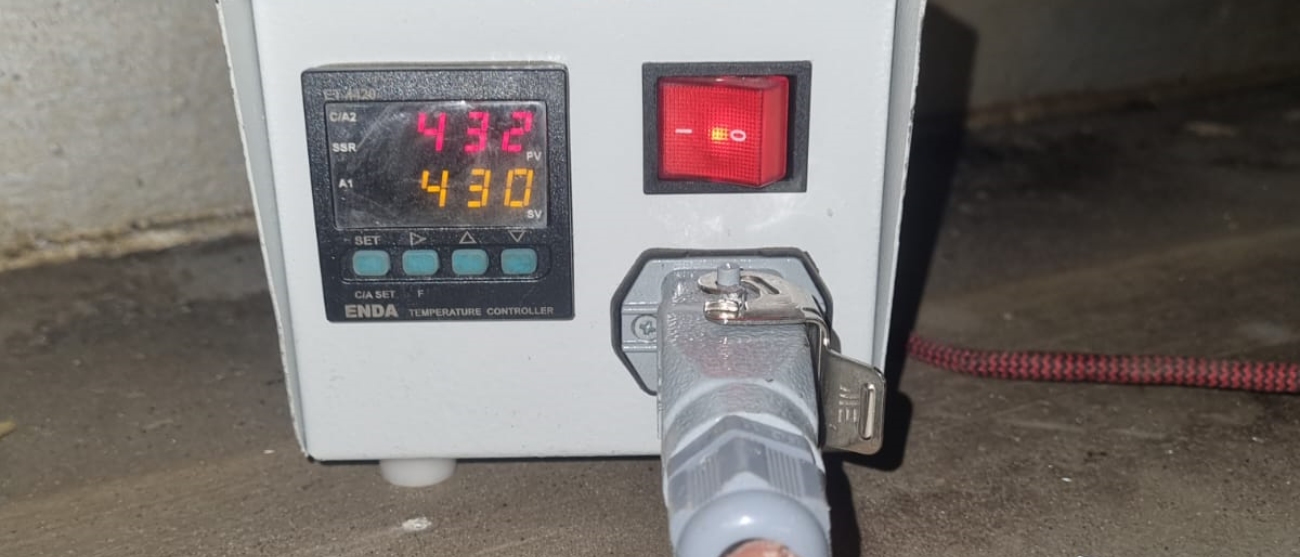
  • Perfect heat sealing, carried out at 430–450°C for 3–4 minutes with controlled pressure.
  • Maintenance support, from thermography to complete check-ups.
  • Worldwide assistance, with teams operating in various industrialized countries.
  • On-site training and supervision services, to also support the customer’s internal staff.

It is this approach that makes the difference between a component that works and a system that performs.

Do you want to avoid downtime and ensure maximum performance?

If you are planning maintenance or need to replace your textile expansion joints, consider a technical partner who can assist you every step of the way.

Contact the New Componit team today for personalized advice or a technical inspection.

Trust those who install every day, in plants like yours.

Contact us to find out more.

It’s not just a question of energy and CO.

When we talk about industrial technical insulation, our minds immediately turn to concepts such as energy efficiency, plant protection, emission reduction and regulatory compliance. All of which are correct. But this view is incomplete.

More and more companies are discovering another value, perhaps less obvious but equally strategic: the direct impact on the well-being of people working in production environments.

More stable temperatures, less noise, greater safety: what was once perceived as an exclusively technical intervention is becoming a concrete lever for improving quality of life in the workplace, reducing accidents, and increasing productivity.

A silent but real transformation that is shifting the focus from the plant… to people.

And perhaps the time has come to start looking at technical insulation from this new perspective as well.

An often underestimated issue: comfort in production departments

Those who work every day in an industrial plant know this well: the intense heat near uninsulated pipes and valves, the constant noise of operating equipment, the impossibility of touching a surface without risking a burn… these are factors that directly affect physical and mental well-being.

  • Fatigue increases.
  • Concentration decreases.
  • Errors multiply.
  • The risk of accidents is always around the corner.

Yet, all this is often accepted as an inevitable part of the job. But it doesn’t have to be that way.

Technical insulation is already the answer. Our Enersave thermal jackets —designed for valves, flanges, pumps and filters—not only serve to contain heat loss and save energy. They also offer concrete, visible, and measurable benefits for those who work alongside this equipment every day:

  • They lower the surface temperature of insulated components, drastically reducing the risk of accidental contact with hot elements.
  • They stabilize the environment, helping to create more balanced thermal conditions, especially in departments where cold and hot areas alternate.
  • They dampen the noise generated by operating equipment, making the department more livable and less stressful from an acoustic point of view.

The result? A better quality of life for workers

QImproving operational comfort triggers a virtuous circle:

  • Operators are more attentive and relaxed.
  • They work in safer conditions.
  • They reduce the margin for error.
  • And, last but not least, they feel that the company is paying real attention to them.

What was once considered a simple technical covering thus becomes a real ally for productivity and staff motivation.plice rivestimento tecnico, si trasforma così in un vero alleato per la produttività e la motivazione del personale.

An advantage for entrepreneurs too

The adoption of technical insulation systems such as Enersave also brings benefits in terms of management:

  • Reduction in accidents = fewer days lost and fewer unexpected costs.
  • More comfortable environment = easier to retain qualified staff.
  • Easier maintenance = the jackets are removable and reusable, simplifying inspections.
  • Energy savings = less heat loss means lower bills and greater sustainability.

It’s not a dream. It works, and it works right away. Those who have implemented these solutions have seen tangible results within the first few weeks.

Change starts with the details. And these really make the difference.

At a time when employee wellbeing is becoming increasingly important, it is time to look at technical details with fresh eyes.

Because a more comfortable, safe and stable environment can also be created with a well-insulated valve.

Would you like to learn more about how to improve the comfort and efficiency of your system?

Contact New Componit for a dedicated consultation. A small intervention. A big step for those who work alongside you every day.

It is not always the most expensive part that stops a system.

Sometimes all it takes is a poorly made joint that causes an invisible heat loss… and therefore performance drops, consumption increases, production stops.

This is how small details become big problems. Especially if they are underestimated.

A prime example? Heat sealing applied to fabric expansion joints.

When done with care and expertise, it guarantees maximum sealing and high performance.

When neglected or done poorly, it can generate heat loss, reduce the useful life of the expansion joint and in the worst cases, cause costly and unexpected system downtime.

What happens if the heat sealing is not perfect?

Heat sealing is a fundamental technical step in the assembly of textile expansion joints. It serves to seal the final layers of the expansion joint, blocking any possible heat or gas leakage.

The process consists of inserting a heat-sealing film between two textile layers, which are then pressed and fused with a plate heated to approximately 430–450°C for 3–4 minutes.

It seems like a simple operation. But it is not.

An incorrect temperature, uneven pressure or hasty application is enough to compromise the effectiveness of the entire expansion joint. If not done properly, heat escapes, system performance drops and the expansion joint basically no longer does its job.

A poorly heat-sealed expansion joint can last up to half its normal life.

This means more replacements, more costs and, even worse, more unscheduled downtime.

When space is limited, there is no margin for error

In real industrial plants, textile expansion joints are not installed under ideal conditions.

Work is often carried out in confined spaces, with reduced visibility and limited accessibility.

It is precisely in these contexts that experience makes the difference.

Heat sealing, when carried out by experienced operators with the right tools, guarantees:

  • a durable seal,
  • zero heat loss,
  • maximum plant performance.

Underestimating an expansion joint can be costly

Textile expansion  joints are often perceived as a minor detail.

“They are inexpensive, we install them internally, no expert is needed”. These are widespread but risky beliefs.

When an expansion joint is poorly installed or heat-sealed carelessly, it becomes a weak point that can compromise the entire system.

Even the slightest failure can cause heat loss, reduced performance and, in extreme cases, days of production downtime.

At that point, the cost of the joint is no longer important.

What matters is how much it costs to get everything up and running again.

Proper installation is a job for specialists

The installation of a textile expansion joint is therefore not an incidental step.

It is a technical activity that requires experience, precision and in-depth knowledge of the materials and operating conditions.

Especially when working in confined spaces, such as boiler bottoms or large industrial plant ducts, every action must be performed with accuracy:

  • the position of the expansion joint,
  • the alignment of the layers,
  • the preparation of the welding points
  • heat sealing at 430–450°C for 3–4 minutes.

Even the smallest error at this stage can halve the useful life of the component.

This is why not all teams are able to guarantee the same level of reliability.

New Componit brings its own method to the field

New Componit does not just supply a product.

It arrives on site. It works in direct contact with the plant. It supervises or performs every single step.

Installation is managed by highly qualified teams, who also operate in complex conditions, where there is zero margin for error.

Each heat seal is made with professional tools, temperature controls, application times and layer sealing.

In addition, New Componit technicians directly support the internal teams of companies, including through training or on-site assistance.

Where precision, expertise and reliability are required, there is only one way to achieve a perfectly functioning joint:
rely on those who install it every day, all over the world.

New Componit installations do more than just make an expansion joint work: they optimise the performance of the entire system.

So, if you are replacing your textile expansion joints, trust those who do it every day in systems like yours.

Talk to a New Componit technician: we will help you plan each stage, choose the most suitable solutions and carry out a flawless installation.

Contact us today for a personalised consultation.

There is always a challenge behind every innovation.

For New Componit, that challenge began years ago: to imagine a fabric expansion joint capable of functioning even in the presence of insulation, without losing its mechanical properties and at the same time guaranteeing durability and safety.

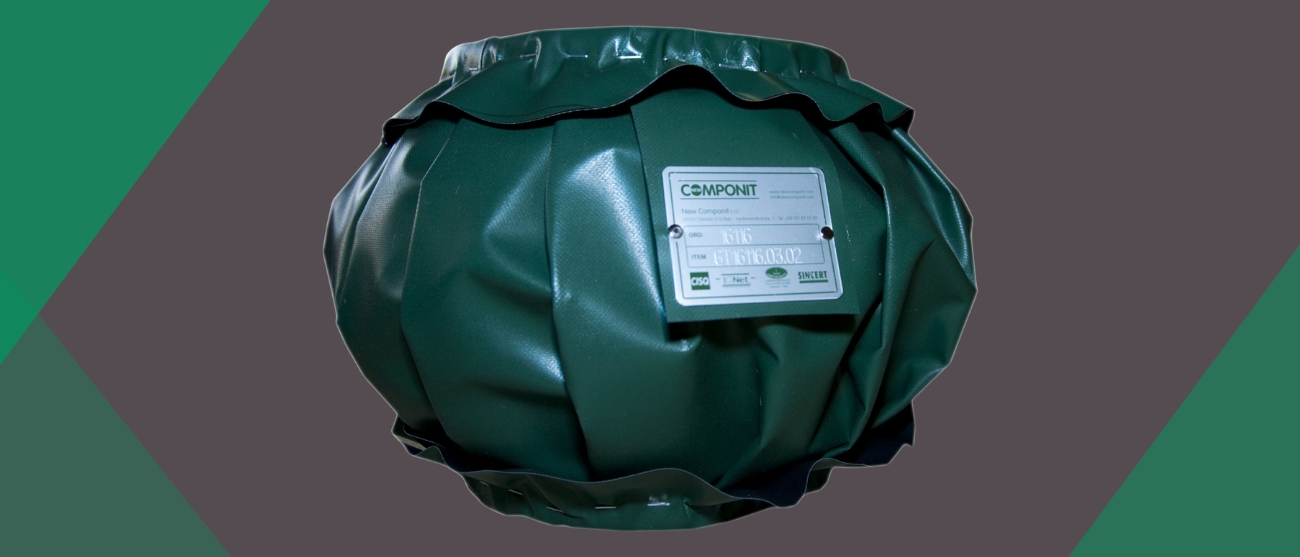
An idea that is as simple as it is complex to implement, which has led to the development of a new generation of high-performance textile solutions: Airflex expansion joints.

When insulation becomes a strength

A fabric expansion  joint is not just a simple component. It is a key element within a plant, because it must absorb vibrations, compensate for movements and withstand often extreme temperature and pressure conditions.

With Airflex, New Componit has opened a new phase in the evolution of industrial fabric expansion joints.

The main innovation concerns the possibility of insulating the expansion joint externally, allowing it to operate at temperatures up to 800°C without compromising its efficiency. This is an important technical achievement, because traditionally insulation tended to reduce the joint’s ability to perform its function. With Airflex, however, insulation becomes an ally, not an obstacle.

But Airflex is not just synonymous with high temperatures.

The line also includes fabric expansion joints dedicated to ventilation, designed to work up to 150°C, with advanced acoustic characteristics that reduce sound vibrations and improve workplace comfort.

What makes Airflex a strategic choice

Airflex fabric expansion joints are not only designed to withstand stress: they are manufactured to offer performance and durability never before seen in other compensators.

Their main features include:

  • Structural flexibility, making them ideal for absorbing vibrations and movements without mechanical stress.
  • External insulation option, a key element in reducing heat loss and optimizing the energy efficiency of systems.
  • Resistance to extreme temperatures, up to 800°C in models designed for high temperatures.
  • Customized solutions, thanks to a tailor-made design process that starts with a study of the customer’s needs.

Not just expansion joints: a complete service

New Componit’s real strength lies not only in its products, but also in the integrated service system that accompanies every supply.

Today’s large industrial plants require partners who are capable not only of producing components, but also of following the entire product life cycle: from engineering to assembly, from maintenance to repair.

For this reason New Componit has created a team of specialists, ready to intervene anywhere in the world, offering a complete package that includes:

  • Supervision and assistance with assembly,
  • Rapid repair interventions to reduce costly plant downtime,
  • Preventive maintenance services,
  • Thermographic reports for monitoring operating conditions,
  • Complementary carpentry and welding activities.

In addition  the Expansion Control System service takes customization to the next level, with:

  • Ad hoc design, thermal analysis and test chamber simulations;
  • 3D or 2D engineering for total project control;
  • Production with premium materials and advanced technologies.

Airflex protects your plant from unexpected downtime

One of the highest costs for an industrial plant is not the price of the component, but the downtime caused by a failure.

Airflex fabric expansion joints, combined with New Componit’s maintenance and repair service, drastically reduce these risks, ensuring production continuity and real savings.

In an increasingly fast-paced and competitive industrial world, relying on standard solutions is no longer enough.

Airflex was created for those who want to guarantee maximum efficiency of their plants, reduce heat loss and have a technical partner always at their side.

Would you like to know how Airflex can improve the efficiency and safety of your plant?

Contact us for a free technical consultation.

Until now, evaluating the efficiency of an industrial technical insulation system was often based on assumptions, estimates or generic parameters.

As of December 1, 2024, with the entry into force of EN 17956:2024, companies finally have an objective, measurable and independent tool to evaluate the energy performance of their insulation system.

This is a paradigm shift that can transform an often neglected area, of the system, into a concrete lever of performance, sustainability and competitiveness.

What the standard EN 17956:2024 provides and why it marks a turning point

EN 17956:2024 is a European standard designed to bring transparency, comparability and scientific method to the evaluation of technical insulation systems.

At its heart is an energy rating system that assigns a score from A (highest efficiency) to G (lowest), based on the density of heat loss flux.

In practice: the more effective an insulation is at retaining energy, the higher its class will be. On the other hand, if it lets too much heat through (beyond the maximum value of class F), it will be classified as G.

This methodology represents a revolution for several reasons:

  • It is independent of the material used, since it evaluates the actual performance, not the brand or type of insulation.
  • It is applicable to any geometry, such as piping, flat surfaces, special components and any other shapes found in complex industrial plants.
  • It covers a wide temperature range, from -30°C to +650°C.
  • It is replicable and comparable, so any company can get a consistent and comparable assessment with that of other operators or plants.

For companies, this is a clear opportunity: to know exactly where, how much and why they are losing energy, in order to take targeted action.

But how does the EN 17956:2024 standard apply in practice? We look at it in the next few lines.

How the method works (and what it allows you to do)

The classification process according to EN 17956:2024 is structured in four key steps, designed to accompany the company from goal setting to reading the results.

1. Selecting the efficiency class

It always starts with a strategic choice: What is the level of energy efficiency I want (or can) achieve?

Choosing the desired class (from A to F) allows you to calibrate the intervention according to the expected ROI.

2. Identifying the process temperature

 Every plant has specific operating conditions. By indicating the operating temperature, you can calculate the thickness needed and the most suitable type of insulation to fall within the selected class.

3. Defining the geometry

The shape, size and type of the surface or component to be insulated (pipes, surfaces, flanges, etc.) are specified. This step is essential for reliable simulations.

4. Interpretation of results

The system returns the maximum allowable dispersion value for the chosen class, along with an indication of the minimum space required to meet it. This way you can check whether your current insulation is adequate–or how far you are from your goal.

From “technical cost” to strategic lever: the benefits for your company

Too often technical insulation is treated as a passive item in maintenance budgets, with invisible losses that, on a European scale, translate into huge economic costs every year.

Adopting EN 17956:2024 means changing your perspective:

  • You can accurately measure the efficiency of your insulation, with real data, not assumptions.
  • You can identify critical points in your system and plan a revamp with a measurable return on investment.
  • You can compare different solutions, without relying only on data sheets or sales brochures.
  • You can demonstrate compliance with regulations such as EED and IED, which are increasingly central to sustainability policies.
  • And above all: you can reduce consumption and costs, improving competitiveness and reducing your environmental footprint.

Do you want to know how to apply EN 17956:2024 to your plant ?

At New Componit, we can support you step by step: from the initial assessment to the performance simulation and the proposal of tailor-made solutions to meet the highest standards.

Get in touch with us to request a simulation based on the TIPCHECK method, our energy diagnosis protocol useful for identifying heat loss and quantifying potential savings.

You’ll find out where you’re losing energy and how much you could really save.

Because today, insulation is no longer just protection.

It’s a competitive advantage.

Want to improve comfort and performance in your plant with a tailored solution?

My Agile Privacy
Privacy and Consent by My Agile Privacy

This site uses technical and profiling cookies. 

You can accept, reject, or customize the cookies by clicking the desired buttons. 

By closing this notice, you will continue without accepting.