
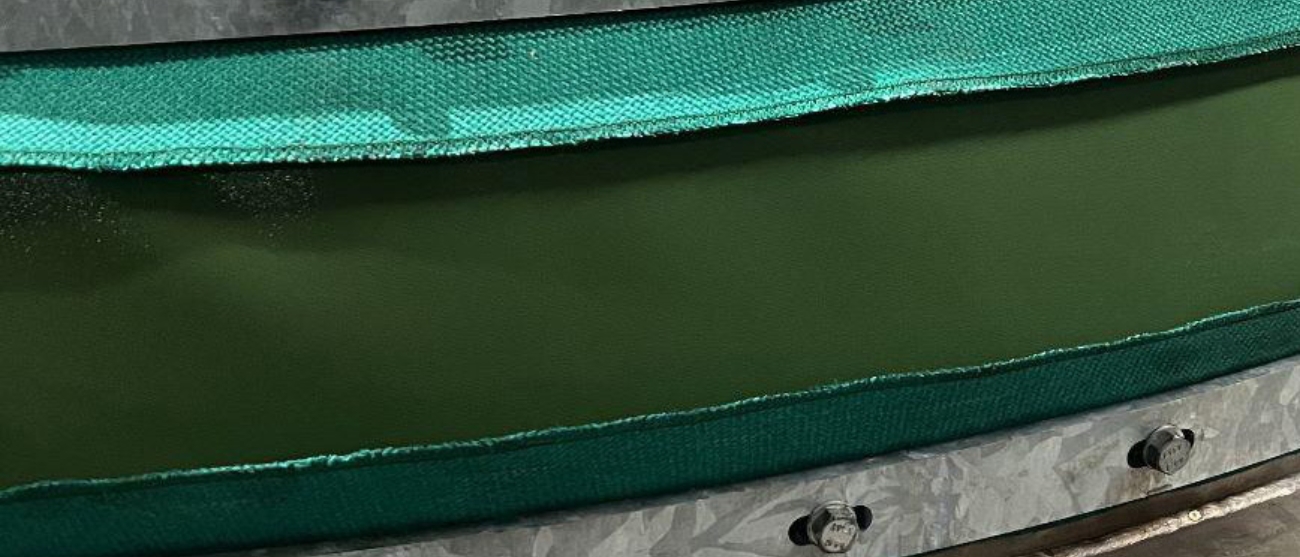
Anyone who works with fabric expansion joints knows full well that a poorly designed component results in higher maintenance costs and plant downtime. What few people realize is that avoiding all of this requires meticulous groundwork.
A textile expansion joint cannot be treated like a catalog item, chosen arbitrarily and installed without a specific design. A meticulous process is required, in which every decision is tailored to the actual conditions of the plant. At New Componit, we’ve been working this way for forty years and every expansion joint we produce is the result of exactly that process.
Data come before the material
It all starts with gathering operational information: operating temperature, pressure, movements, flange geometry and the possible presence of chemicals or corrosive agents. This step influences every subsequent decision and we devote a great deal of attention to it.
An expansion joint operating at 400°C on a flue gas duct has completely different requirements than one installed on a fan or on the exhaust of a gas turbine. From the outside, they might look almost identical, but designing them the same way means ignoring the actual conditions under which they will have to operate. Understanding the context before choosing the material is what determines whether the coupling will last over time or degrade sooner than expected.
From material selection to layering: this is where the joint’s durability is determined
Once the design has been finalized, the materials are selected : glass fiber, silica, PTFE, metal mesh/foil, and anti-corrosion barriers each address a specific need.
- Glass fiber provides structural strength and resistance to high temperatures.
- Silica is used where temperatures exceed the heat resistance threshold of glass.
- PTFE provides chemical resistance.
- Metal foils/meshes act as a thermal barrier and/or protection against corrosive agents, depending on their position in the sequence
Next comes layering, the most delicate phase of the entire process. The materials are precisely cut and layered in the sequence established during the design phase. Machine precision is necessary here, but not sufficient: recognizing localized stress between layers with different coefficients of expansion—before it becomes a problem under thermal load—requires direct, field-proven experience. It is that subtle difference that only becomes apparent once the expansion joint is put into service.
From the workbench to the plant
Once the layering is complete, the process moves on to sewing and assembly. The expansion joints are reinforced, the flanges are prepared and positioned according to the design. Before delivery, each expansion joint is inspected for dimensions, alignment, and finish quality. A component that is out of specification can compromise the seal in the plant or complicate installation in a way that is difficult to correct once in place.
The product that leaves our production line is a component built to withstand real-world operating conditions, designed to perform reliably even where temperatures are high or the environment is chemically aggressive.
At New Componit, we have been manufacturing textile expansion joints since 1986. Over forty years of production, we’ve accumulated hands-on experience that no manual can provide: how expansion joints behave under prolonged thermal stress, where they fail prematurely, and why. That knowledge goes into every component we produce, even before we cut the first layer.
If you have a specific application to evaluate or want to understand which configuration is best suited for your system, we’re available for a direct consultation.

 Sales Manager
Responsible for commercial management and the development of business opportunities in the fields of industrial insulation and expansion joints.