New Componit

Hexavalent Chromium

When working in high-temperature environments, insulation cannot be compromised.

It must be effective, resistant… and above all, safe.

In recent years, more and more companies are choosing a new generation of materials: so-called calcium-free materials, made of high-purity quartz fibre.

Why? Because they can withstand extreme heat without triggering dangerous chemical reactions.

A smart choice — and an increasingly popular one — for those who want not only good performance, but also greater protection for workers, fewer hidden risks and greater regulatory peace of mind.

What are ‘calcium-free’ materials?


They are advanced technical materials, free of components that can trigger unwanted reactions at high temperatures, such as calcium, sodium or potassium oxides.

They are obtained through a chemical purification process that allows a composition of over 95% silicon dioxide (SiO) to be achieved, with the addition of alumina to increase stability.

Compared to traditional insulators – rock wool, ceramic fibres, untreated glass fibres – they offer:

  • Greater thermal resistance (up to 1200°C);
  • Dimensional stability even in aggressive environments;
  • No release of hazardous substances.

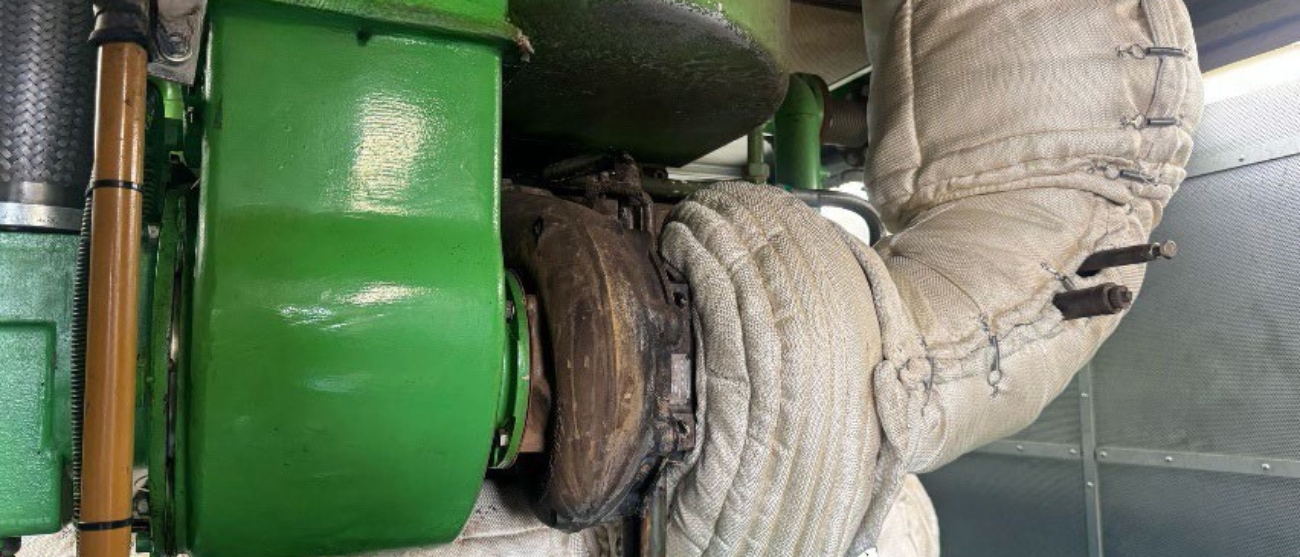
In summary: these materials are designed to protect systems and people, even in critical areas such as expansion joints, turbines, compensators and flanges.

Why are they so important?

Because not all insulating materials are the same.

At certain temperatures, traditional calcium-based insulating materials can react with chromium and oxygen steel, forming hexavalent chromium — a substance classified as a category 1B carcinogen.

With calcium-free materials, this risk is eliminated at source: there is no calcium, so no reaction can occur.

This means:

  • Less exposure for operators;
  • No extraordinary remediation;
  • Greater ease in complying with regulations (such as the REACH Regulation and Legislative Decree 81/2008);
  • Fewer surprises during environmental or HSE audits and inspections.

The advantages for your company

Adopting calcium-free materials means:

  • Reducing the chemical risks associated with the formation of hexavalent chromium.
  • Protecting workers’ health with solutions that are safe even in critical conditions.
  • Streamlining HSE procedures and avoiding costly remediation.
  • Extending the life of insulation even in aggressive environments.
  • Dealing with fewer unexpected events, greater control and regulatory compliance.

It is not just a technical choice.

It is a more conscious, modern and responsible way of working.

Green Flex: More than just a product, a responsible choice

Choosing safer materials means investing in more reliable systems, better protected operators and more robust companies.

And calcium-free materials, such as those used in the production of the Green Flex line, are now the technical standard for those who work at high temperatures and want to eliminate the risk at source.

Green Flex is designed not to generate hexavalent chromium, even in the most critical conditions and to offer stable, long-lasting performance that complies with the most demanding regulations.

Would you like to know if your plant still uses potentially hazardous materials?

Contact New Componit team today for a free consultation.

We will analyse the critical points together and help you choose the right solution to work safely, with more control and fewer unexpected events.

Because good insulation is not just a barrier.

It is a competitive advantage that protects, simplifies and improves every aspect of your operations.


During the disassembly of insulation systems, there is a possibility of exposure to calcium chromate. This can occur if the insulation elements and/or materials used, contain calcium or calcium oxides and have been in contact with hot components containing chromium at operating temperatures above 300°C. Likewise, other manifestations in the form of sodium or potassium chromate cannot be ruled out either.

If yellowish dust is visible within the insulation or on the previously insulated component during removal of the insulating elements, a rapid chromium test should be performed immediately, and in case of a positive result, its presence should be reported and a decontamination performed.

First of all, disassembly of insulation should be carried out by personnel in charge and properly trained to do it.

In general, it is advisable to be careful if you have to handle insulation materials that have already been used, and to consider that any cleaning of the machine must be carried out by companies which are responsible for doing it safely.

Also remember that already used insulation materials are considered contaminated and must be disposed of properly.

Want to improve comfort and performance in your plant with a tailored solution?

In recent months, we at New Componit have decided to tackle the subject of hexavalent chromium in depth through our various channels in order to provide our team and our customers with correct information on the risks; at the same time, we want to provide a timely response to the request for preventive measures to be implemented in industrial plants.

Hexavalent chromium has been a major issue for almost a year and is still being updated: assessments on the hazardousness of hexavalent chromium in industrial plants are still ongoing.

The European Commission’s restriction request.

The European Commission has recently submitted a proposal to the European Chemicals Agency (ECHA) to update the restriction request for hexavalent chromium substances; in particular, 12 more substances will be evaluated in addition to the two already included in the original request of September 2023.

The substances included in the new restriction proposal submitted to ECHA may pose risks to workers and the general public, as well as to the environment, when used as substitutes for hexavalent chromium substances subject to authorisation.

How does the restriction procedure work?

Restriction procedures are essential for the protection of workers, the general public and the environment: an EU Member State, or the European Commission, can propose a restriction if it fears that a substance poses an unacceptable risk to human health or the environment.

The procedure is initiated by submitting the restriction request to ECHA, the European Chemicals Agency; after the request has been checked for conformity, the proposal is analysed by the two ECHA committees:

  • the Committee for Risk Assessment (RAC) prepares its opinion on the appropriateness of the restriction based on the risks to human health and the environment identified for the substance.
  • the Socio-economic Analysis Committee (SEAC) prepares its opinion on the socio-economic impacts of the proposed restriction, then on the basis of the costs and benefits of the restriction.

Once all comments have been received by ECHA, the European Commission makes an overall assessment and updates the restriction list: once the list is approved, the industry, which includes the entire supply chain, is obliged to comply and the EU Member States become responsible for enforcing the restriction.

Latest news on hexavalent chromium

Currently, the restriction procedure for hexavalent chromium substances is still in the analysis phase; the broadening of the scope of the application has in fact led ECHA to postpone the final evaluation and consequently the drafting of the restriction list.

During the analysis phase, ECHA committees may invite interested parties to submit evidence to support the preparation of the proposal; in the case of hexavalent chromium, on 6 June 2024, ECHA discussed the initial findings based on the data initially received and launched a second call for evidence of risks and benefits to support the updated proposal.

Until the final list of restrictions is drawn up, it is important to continue to keep up-to-date on this issue to ensure that you comply with European regulations and protect the well-being of your workers and the environment.

Many substances derived from hexavalent chromium are easily found in industrial plants and are classified as carcinogenic and highly toxic to the environment, with long-term health consequences.

Among the hazardous substances derived from hexavalent chromium, it is good to consider calcium chromate; this compound is formed as a result of the oxidation of chromium with calcium oxide and it is important to prevent its formation in your plant.

How to prevent risks from hexavalent chromium compounds?

Avoiding the use of thermal insulation systems with materials containing calcium, sodium, potassium or their oxides is the first step in securing yourself against risks from hexavalent chromium.

Today, it is possible to prevent the formation of hexavalent chromium compounds, such as calcium chromate, in industrial systems by adopting textile solutions specifically designed for this purpose.

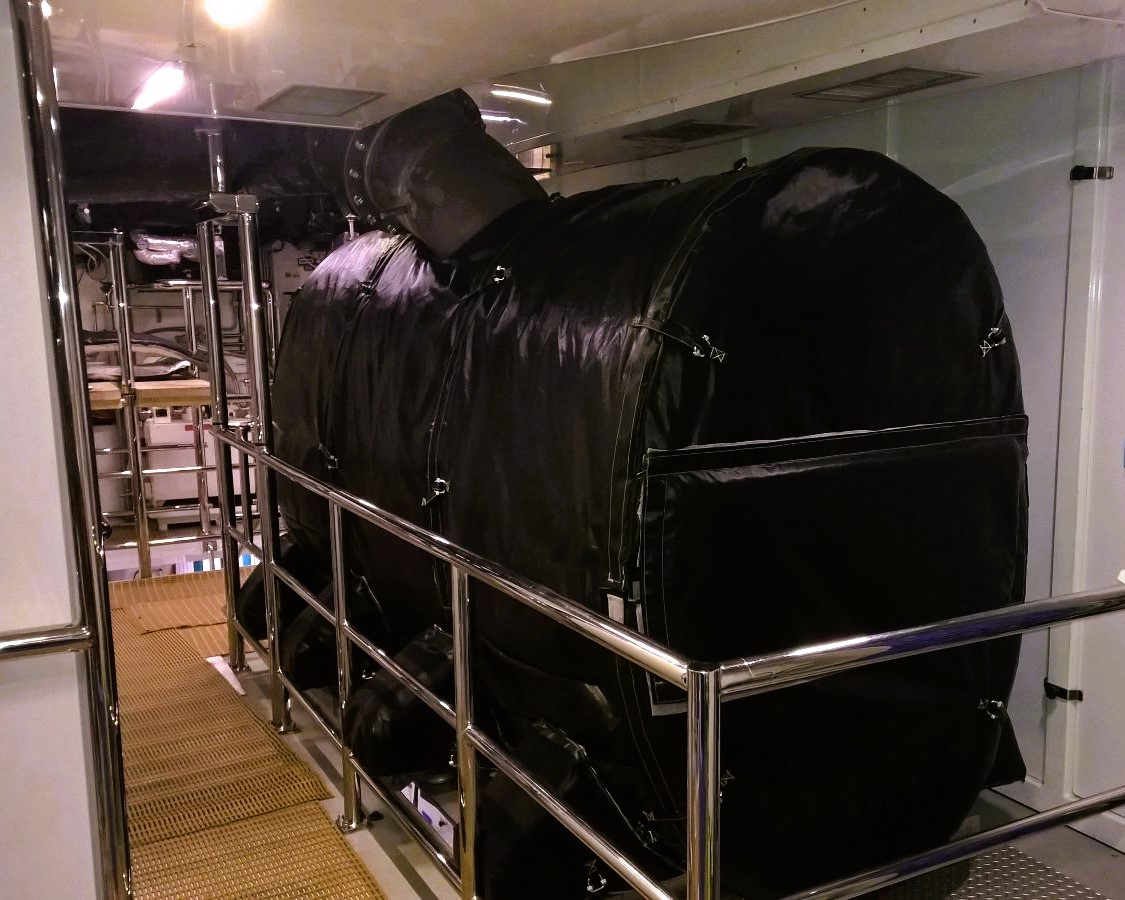
We at New Componit have over the years invested in research and development of textile solutions that prevent the possible formation of hexavalent chromium in industrial plants. In fact, we have included the Greenflex line in our product range, which includes high-temperature insulation systems with calcium-free protection. By replacing textiles and insulation mats containing calcium, our Greenflex textiles do not release toxic substances when used, making them ideal for worker and environmental safety and allowing you to work in compliance with international safety regulations.

Our high-temperature products also help to contain heat, ensuring greater efficiency of insulated equipment: they therefore contribute to cost savings, but above all to a reduction in potential CO2 emissions into the atmosphere, making your plant even more environmentally sustainable.

Want to improve comfort and performance in your plant with a tailored solution?

To avoid the formation of hexavalent chromium, you need to know conditions under which there is possible formation of hexavalent chromium or its compounds and adopt carefully designed systems to prevent the formation of these toxic substances.

The use of calcium-free high-temperature insulation systems takes into account safety for people and the environment, and refers to international regulations on occupational safety and environmental protection.

Textiles from the GreenFlex line, designed to prevent the formation of hexavalent chromium, are ideal for the safety of operators and environment.

Want to improve comfort and performance in your plant with a tailored solution?

Today I would like to talk you about an issue that I have been hearing about for several months: the development of hexavalent chromium and derivatives on equipment thermally insulated.

I have thoroughly documented myself and I think it is worthwhile to make some consideration.

We at New Componit want to highlight the danger of working in contact with waste insulation materials in general and in particular, with those containing calcium which worked under defined operating conditions.

The good news? There are fabric solutions especially designed to prevent the formation of hexavalent chromium.

Want to improve comfort and performance in your plant with a tailored solution?

For months now, there has been talk about the growing problem of hexavalent chromium formation on insulated structures in industrial plants.

Why has there been a debate on this issue?

Because this compound, resulting from thermochemical reactions among metal alloys containing chromium and oxides in conventional insulation materials, is a safety threat.

The danger of hexavalent chromium

Hexavalent chromium is classified as a very hazardous substance, with toxic effects on the environment and serious risks to human health. It is, therefore, essential to understand which situations are at risk and how to deal with them.

Since we have clearly in our minds what happened in the past with asbestos, we cannot ignore the situation and take decades before we recognise the hazardous nature.

It is therefore vital to understand the conditions that facilitate its formation. This compound is the result of a thermochemical reaction that causes the oxidation of chromium (contained in many metal alloys), under certain environmental conditions with the calcium oxide contained in many conventional insulation materials.

The result is a compound called hexavalent chromium, which no longer volatilises below 800°C.

But what are the environmental conditions to pay particular attention to?

  • The presence of ‘old style’ insulating materials containing calcium, sodium or potassium.
  • The reaching of operating temperatures between 300°C and 600°C.
  • The presence of metal alloys containing chromium.
  • A specific percentage of oxygen in the working environment

Should all these conditions occur, an imaginary alarm bell must be set off.

How to deal with the problem

Recognising the presence of hexavalent chromium is crucial. During dismantling operations the presence of a yellowish powder is an important indicator.

In such cases, it is essential to act promptly:

  • disassembly of insulators must be carried out by properly trained personnel;
  • the result of rapid chromium tests can confirm its presence;
  • in the event of a positive result, it is important to proceed with immediate remediation;
  • handling of materials contaminated with this compound must be entrusted to experienced personnel capable of working safely;
  • contaminated materials must be disposed of properly

But what preventive measures can be implemented?

The aspect of prevention is very close to our hearts: in addition to correct information on these risks, what preventive measures can be implemented in industrial plants?

New Componit’s response, which is the result of intensive product research and development, is the design of calcium-free high-temperature insulation systems to ensure the safety of people and environment, in full compliance with international occupational and environmental safety regulations.

Want to improve comfort and performance in your plant with a tailored solution?

My Agile Privacy
Privacy and Consent by My Agile Privacy

This site uses technical and profiling cookies. 

You can accept, reject, or customize the cookies by clicking the desired buttons. 

By closing this notice, you will continue without accepting.